Category: Uncategorized

  • A New Chapter: What the UK–EU Trade Reset Means for Spanish Companies 

    A New Chapter: What the UK–EU Trade Reset Means for Spanish Companies 

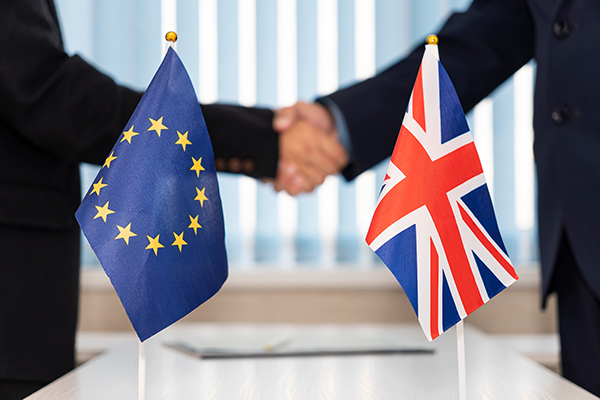
    On 19 May 2025, the British Prime Minister, Keir Starmer, announced a significant breakthrough in the United Kingdom’s post-Brexit journey: a new strategic partnership agreement with the European Union. This deal, described by both sides as a “reset”, aims to reduce trade friction, enhance regulatory cooperation, improve labour mobility and restore investor confidence across borders. For Spanish businesses operating in the UK or seeking to enter the market, this agreement opens a window of renewed opportunity.

    One of the most immediate and tangible benefits of the new UK–EU agreement is the simplification of trade procedures. Customs processes, long viewed as a persistent post-Brexit pain point, are now being streamlined in a way that brings much-needed certainty and efficiency. While the deal doesn’t restore full single market access, it significantly reduces bureaucratic hurdles and improves predictability for both importers and exporters. 

    A crucial element is the introduction of a Sanitary and Phytosanitary (SPS) agreement, which simplifies the movement of food and agricultural goods between the UK and the EU. For Spanish exporters of wine, fresh produce, cured meats and other iconic food products, this is a welcome relief. The removal of excessive red tape not only lowers costs but also improves delivery timelines— two factors essential for maintaining competitiveness in the British market. Notably, this SPS agreement is not time-limited, offering businesses a rare sense of long-term stability in an otherwise volatile trading environment. 

    That said, regulatory divergence remains a part of the post-Brexit landscape. Although the new agreement does not include mutual recognition of conformity assessments, recent discussions suggest that the UK will need to align closely with EU standards in many sectors to preserve the deal’s functionality. For Spanish companies in tightly regulated sectors such as agri-food, cosmetics, pharmaceuticals and medical devices, dual compliance requirements remain. 

    Sectoral Impacts 

    Labour Mobility 

    The proposed youth mobility scheme would enable young people from both the UK and EU to live and work across borders more easily. For Spanish businesses grappling with labour shortages or seeking to diversify their workforce, this proposal could help alleviate recruitment challenges. It also presents an opportunity to attract young European talent for internships, placements, and entry-level roles, bringing fresh perspectives and supporting long-term workforce development. While the scheme is expected to be capped and time-limited, it is nonetheless a step in the right direction— particularly for companies in sectors like hospitality, healthcare, and agriculture that rely on flexible, seasonal staffing. 

    Defence and Security
    A notable expansion of the partnership includes the establishment of a formal UK–EU defence and security pact. Officials from both sides will meet biannually to coordinate on foreign policy, sanctions, and strategic planning, including the development of a joint space security policy. Furthermore, the agreement paves the way for UK-based arms firms to access the €150 billion Security Action for Europe (SAFE) fund, which could encourage greater EU-UK defence industry integration, benefiting Spanish firms with operations or partnerships in the UK defence sector. 

    Fishing
    The agreement preserves the current fishing access status quo until 2038, offering long-term certainty for Spanish fishing operators active in UK waters. The arrangement builds on the 2020 Brexit deal, which originally granted the UK a gradual 25% quota increase. Spanish fleets will retain licensed access to British waters under agreed annual quotas set alongside the UK and Norway. Additionally, a new £360 million Fishing and Coastal Growth Fund will support innovation in fishing technologies and equipment, potentially opening avenues for collaboration and investment among Spanish maritime suppliers and coastal communities. 

    Farming Exports
    In a strategic trade-off, the UK secured improved terms on food exports to the EU in return for extended fishing access. This includes the elimination of most routine border checks on animal and plant shipments. For Spanish agricultural exporters, this easing of restrictions improves reciprocal access, streamlines documentation and helps preserve freshness in deliveries. However, the UK must adhere to EU-aligned standards to maintain this privilege, meaning Spanish businesses can count on regulatory consistency across agricultural and food safety frameworks. 

    Passport E-Gates and Travel
    British travellers will be eligible to use e-gates at various European airports as the EU rolls out its new digital border system starting in October 2025. Although implementation will be at the discretion of individual member states, Spain is expected to follow suit given its significant tourism ties with the UK. Smoother travel procedures will also enhance business mobility, support short-term assignments, and facilitate attendance at conferences. New measures easing pet travel may further benefit both the tourism and pet export sectors. 

    Carbon and Energy

    In terms of sustainability, the UK and EU have agreed to link their carbon markets to prevent carbon leakage and avoid tariffs on high-emission goods like steel and cement. This alignment is expected to save British firms up to £800 million in carbon taxes, shielding them from EU tariffs while promoting a level playing field. Spanish companies in heavy industry, green tech, and energy could benefit from increased investment certainty and simplified cross-border energy trade. Negotiations are also starting on UK participation in the EU’s shared electricity market, potentially enhancing energy price stability and grid resilience across the region. 

    The new UK–EU deal is more than a symbolic political gesture—it represents a tangible step forward in rebuilding economic trust between the UK and its European neighbours. For Spanish companies, the implications are both promising and complex. On one hand, we now see improved customs processes, reduced red tape, enhanced access to markets, and renewed openness to investment and labour mobility. On the other hand, regulatory burdens and market fragmentation persist, particularly for companies in highly regulated industries such as agri-food, pharmaceuticals, finance, and cosmetics. 

    The 2025 UK–EU agreement offers more than just a policy shift; it’s a chance to rebuild trust and reinvigorate cross-border collaboration. By strengthening the cultural and economic bonds between Spain and the UK, it gives companies a valuable platform for recruiting and developing binational teams.


    Blog post written by Desirée Odulaja

  • NEW PATRON MEMBER | Rimkus

    NEW PATRON MEMBER | Rimkus

    The Spanish Chamber of Commerce was delighted to welcome Rimkus as a Patron this year.

    Rob Coupe, Managing Director EMEA at Rimkus

    Could you provide a brief overview of Rimkus and its presence in the UK market?

    Rimkus is a worldwide provider of engineering, technical, and construction consulting to corporations, insurance companies, law firms, and government agencies. Rimkus experts specialise in forensic consulting, dispute resolution and construction management services, solutions for the built environment, and human factors support for the consumer, industrial, and healthcare industries.

    For more than 40 years, the company’s professional engineers, architects, scientists, and technical specialists have been recognised for their commitment to service excellence by local, national, and international business communities.

    With a network of over 110 offices globally, Rimkus serves the UK and Europe markets through our strategically located offices in London, Manchester, Glasgow, and Dublin. Combining our local expertise with global insights enables our clients to make informed decisions and secure successful outcomes in their legal and technical challenges.

    As a new Patron of the Chamber, what benefits do you hope to gain from our collaboration?

    Rimkus aims to strengthen its existing relationships within the UK and Europe business communities and gain greater visibility in the construction, infrastructure, and energy sectors in Spanish markets. We aim to build new strategic relationships, expand our professional network, and remain informed on the latest developments shaping the market. We are confident that our collaboration with the Spanish Chamber of Commerce will play a vital role in supporting our growth ambitions across the Spanish and LATAM markets. We look forward to contributing to the advancement of business
    relations between Spanish and UK/Europe-based organisations.

    What key values define your company, and how are these values integrated into your daily operations and customer interactions?

    At Rimkus, our core values are integrity, accountability, commitment, and teamwork. These principles are deeply ingrained into every aspect of our daily operations and interactions, and guide how we communicate with our people and clients. We commit to upholding the highest ethical standards, striving for integrity, impartiality, and transparency by encouraging open communication and providing evidence-based solutions across our expert analyses and consultancy services.

    Accountability and integrity are important for our field. We have to ensure that we are honestly and candidly looking at all the facts that are available in every case to enable us to provide evidence-based, unbiased opinions.

    The culture we promote at Rimkus is teamwork and collaboration. We have the unique ability to cross-pollinate multiple disciplines within the same project, with our experts working across multiple locations to deliver multi-faceted solutions to our clients.

    Our commitment to innovation allows us to constantly improve the tools and methods that our experts use to assist their clients.

    How does Rimkus differentiate itself from competitors in the UK and Europe construction sectors, and what specific strategies do you employ to enhance your market position?

    Rimkus brings together a team of over 1,000 experts, each with 15 to 20 years of proven
    experience across public and private sectors.

    Rimkus boasts a geographical footprint of over 110+ offices in 80 countries enhancing cultural and regulatory awareness by offering local knowledge in regional regulations, cultural nuances, and market dynamics.

    Another major differentiator is our multi-disciplinary service offering, a ‘one-stop-shop’ for a diverse range of engineering and technical needs, enabling cross-regional knowledge sharing across multiple practice areas and reducing the need for multiple vendors.

    We have a long-standing reputation for quality, dependability, and customer service.

    What is Rimkus vision for the future, and what specific strategies or actions are you implementing to achieve it?

    Rimkus’s vision is to be a worldwide leader in engineering and technical consulting. We do not see barriers or limitations; instead, we see opportunities and possibilities.

    We will continue to invest in innovation and technology, adopting advanced methodologies to enhance our forensic engineering, dispute resolution, and consultancy capabilities, and foster a culture of excellence for our people through ongoing training and collaboration to tackle emerging industry challenges.

    Our goal is to increase our market share and drive company expansion through both acquisition and organic growth by providing industry-leading solutions. Client-centric solutions and best-in-class service remain our focus, as we tailor services to deliver effective outcomes.

    Rimkus will continue to contribute positively to our communities, guided by ethical and transparent principles, through our evolving focus on ESG and CSR initiatives.

  • The Expansion of Offshore Wind Energy and Infrastructure in the UK: Opportunities for Businesses

    The Expansion of Offshore Wind Energy and Infrastructure in the UK: Opportunities for Businesses

    Context: The Renewable Energy Challenge in the UK 

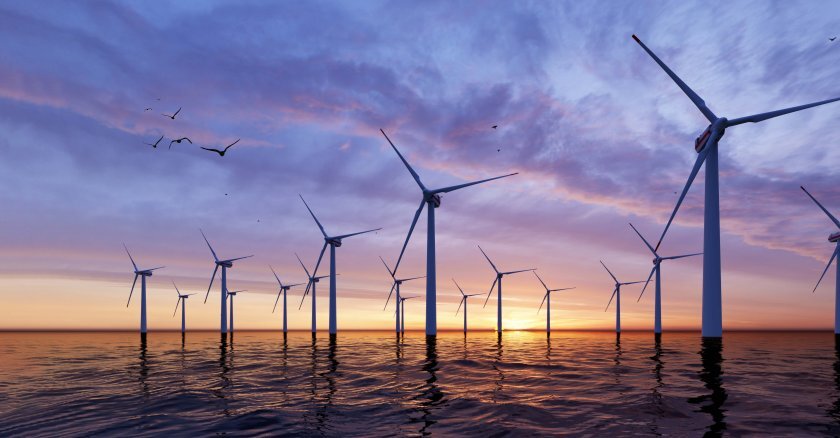
    The United Kingdom has established itself as a global leader in offshore wind energy, with large-scale projects such as Hornsea 3 (2.9 GW) and Dogger Bank (3.6 GW). However, despite this progress, many offshore wind farms remain disconnected from the national grid, preventing the generated electricity from reaching consumers. 

    Due to this lack of infrastructure, the British government has had to compensate energy companies financially for electricity that cannot be transmitted. This situation has raised concerns about the efficiency of the country’s energy transition and highlighted the urgent need for investment in electrical infrastructure. 

    Key Companies and Investments in Offshore Wind Energy and Infrastructure 

    Several companies play a crucial role in expanding energy infrastructure in the UK: 

    • Scottish Power (Iberdrola) – It has announced a £24 billion investment between 2024 and 2028 to modernise the electricity networks and boost offshore wind energy projects, strengthening the energy transition and the creation of green jobs in the United Kingdom. (1) 
    • Balfour Beatty, Kier Group, and Costain – These construction companies have experienced significant growth due to infrastructure investments, with combined order books exceeding £30 billion. (2) 
    • Ofgem and the Eastern Green Link 1 (EGL1) Project – In November 2024, Ofgem approved a £2 billion funding package for Eastern Green Link 1, a 200 km HVDC cable that will connect Scotland with the northeast of England and facilitate the
      transmission of renewable energy. (3)
      Morocco-UK Interconnection Project – It plans a solar and wind power facility in Morocco with a capacity of 11.5 GW, connected to the United Kingdom by a 3,800 km HVDC subsea cable that will supply more than 7 million homes. (4)
      Iberdrola – It has announced investments that will double its installed renewable capacity, modernise distribution networks, and strengthen its role in the development of sustainable energy infrastructure. (5)

    Strategies and Key Projects for Energy Infrastructure Expansion

    The UK is implementing various strategies and projects to enhance its energy infrastructure and facilitate the integration of renewable energy:

    • Development of High-Voltage Direct Current (HVDC) Networks – The European InterOPERA project, funded by the European Union through the Horizon Europe programme, aims to establish interoperability standards for multi-terminal HVDC networks. These networks will enable more efficient electricity transmission from offshore wind farms and facilitate the integration of energy islands into the European power system. (6)
    • Connection of Offshore Wind Farms to the Grid – Hitachi Energy has been selected to supply high-voltage direct current (HVDC) transmission technology for the Hornsea 3 offshore wind farm, one of the largest in the world. The contract includes the implementation of the HVDC Light™ system, which will enable the transmission of up to 2,900 MW of renewable electricity from the wind farm, located in the North Sea, to the
      UK’s onshore power grid. (7)
    • Investment in Energy Storage and Smart Grids – According to the International Renewable Energy Agency (IRENA), global investments in energy transition technologies — including energy storage — reached a record $1.3 trillion in 2022. (8)


    Existing Offshore Wind Farms in the United Kingdom

    The United Kingdom remains a global leader in offshore wind energy. By the end of 2024, the installed capacity of offshore wind farms had reached 14.7 GW. In addition, projects totalling 6.3 GW were under construction, and Contracts for Difference (CfD) had been awarded for a further
    9 GW, reflecting sustained growth in the sector.


    Notable Offshore Wind Farms in Operation

    • Beatrice Offshore Wind Farm: Inaugurated in 2019 off the northeast coast of Scotland, Beatrice has an installed capacity of 588 MW. It is one of the largest offshore wind farms currently operating in Scotland, capable of supplying electricity to over
      450,000 homes. (9)
    • Hornsea 2: Inaugurated in 2022, Hornsea 2 is currently the largest offshore wind farm in the world. Located in the North Sea, off the coast of Yorkshire, it has an installed capacity of 1,386 MW and can supply electricity to over 1.4 million British homes. (10)
    • Moray East: Located in the Moray Firth since 2022, in the northeast of Scotland, Moray East is one of the largest offshore wind farms in the country, with an installed capacity of 950 MW. (11)
    • Greater Gabbard: Located off the coast of Suffolk, Greater Gabbard was one of the first large-scale offshore wind farms in the United Kingdom. It has been in operation since 2012 and has a capacity of 504 MW, enough to supply electricity to approximately 530,000 homes. (12)
    • Walney Extension: With a capacity of 659 MW, this wind farm is located off the coast of Cumbria and, upon its inauguration in September 2018, was the largest offshore wind farm in the world. (13)
    • London Array: Located at the mouth of the River Thames, was inaugurated in July 2013. With a capacity of 630 MW and 175 turbines, it was the largest offshore wind farm in the world at the time. (14)


    Projects Under Development and Planning

    • Dogger Bank: Situated in the North Sea, this project will be developed in phases and will have a total capacity of 4,800 MW, making it the largest offshore wind farm in the world once completed. (15)
    • East Anglia Hub: Iberdrola is developing the East Anglia Hub complex, with a total capacity of 2,900 MW, comprising three projects in UK waters and representing an investment of over £6.5 billion. (16)

    The Crown Estate provides an interactive map showing the location and details of each offshore wind farm in the UK, offering real-time information on their contribution to thenational power supply. (17)

    Opportunities for Businesses in the Sector

    The expansion of offshore wind energy and infrastructure in the UK presents multiple opportunities for Spanish companies:

    • Participation in Large-Scale Projects – Spanish companies with expertise in renewable energy can contribute to projects like Iberdrola’s East Anglia Hub, which integrates three offshore wind developments in the North Sea. (18)
    • Development of Innovative Technologies – Growing investment in R&D offers opportunities for companies to develop energy storage and efficiency solutions.
    • Expansion of the Service Market – The increasing demand for maintenance and operation of new energy infrastructure creates a growing market for specialized service providers.

    Connecting offshore wind farms to the national grid is key to ensuring the efficient use of generated energy and advancing the UK’s energy transition. This process is already underway, with major investments in transmission and storage infrastructure, creating opportunities for companies specializing in technology, construction, and maintenance of power grids and renewable energy in a rapidly growing market.

    Footnotes:

    (1) ScottishPower. Iberdrola doubles UK investment.
    https://www.scottishpower.com/news/pages/iberdrola_doubles_uk_investment.aspx 

    (2) City A.M. Infrastructure boom lifts Balfour Beatty, Kier Group and Costain. https://www.cityam.com/infrastructure-boom-lifts-balfour-beatty-kier-group-and-costain/ 

    (3) Ofgem. Race to clean power surges ahead: New electricity superhighway greenlit. https://www.ofgem.gov.uk/press-release/race-clean-power-surges-ahead-new-electricity-superhighway-greenlit

    (4) Xlinks. Morocco-UK power project. https://xlinks.co/morocco-uk-power-project/ 

    (5) Iberdrola. Galan confirms Iberdrola commitment UK international investment summit Starmer.
    https://www.iberdrola.com/press-room/news/detail/galan-confirms-iberdrola-commitment-uk-international-investment-summit-starmer

    (6) InterOPERA. InterOPERA press release FINAL. https://interopera.eu/wp-content/uploads/Docs/InterOPERA-press-release-FINAL.pdf

    (7) Hitachi Energy. (2022, julio). Hitachi Energy wins order to connect one of the world’s largest offshore wind farms to the UK
    power grid. https://www.hitachienergy.com/es/es/news-and-events/press-releases/2022/07/hitachi-energy-wins-order-to-connect-one-of-the-world-s-largest-offshore-wind-farms-to-the-uk-power-grid

    (8) International Renewable Energy Agency (IRENA). Finance and investment. https://www.irena.org/Energy-Transition/Finance-and-investment/Investment 

    (9) SSE Renewables. Beatrice offshore wind farm. https://www.sserenewables.com/offshore-wind/operational-wind-farms/beatrice/

    (10) Ørsted. (2018, septiembre 6). World’s largest offshore wind farm officially unveiled.
    https://orsted.co.uk/media/newsroom/news/2018/09/worlds-largest-offshore-wind-farm-officially-unveiled 

    (11) Ocean Winds. Moray East. https://www.oceanwinds.com/projects/moray-east/

    (12) SSE Renewables. Greater Gabbard offshore wind farm. https://www.sserenewables.com/offshore-wind/operational-wind-farms/greater-gabbard/

    (13) Ørsted. (2018, septiembre 6). World’s largest offshore wind farm officially unveiled.
    https://orsted.co.uk/media/newsroom/news/2018/09/worlds-largest-offshore-wind-farm-officially-unveiled 

    (14) RWE. London Array offshore wind farm. https://uk.rwe.com/locations/london-array-offshore-wind-farm/

    (15) Agenda Industrial. (2024, octubre 28). Los 10 parques de energía eólica offshore más impactantes del mundo.
    https://agendaindustrial.com/sector-energetico/los-10-parques-de-energia-eolica-offshore-mas-impactantes-del-mundo/

    (16) Iberdrola. Complejo eólico marino East Anglia Hub. https://www.iberdrola.com/conocenos/nuestra-actividad/energia-eolica-offshore/complejo-eolico-marino-east-anglia-hub

    (17) Offshore Wind. (2015, noviembre 23). Crown Estate creates offshore wind interactive map.
    https://www.offshorewind.biz/2015/11/23/crown-estate-creates-offshore-wind-interactive-map/ 

    (18) Iberdrola. Galan confirms Iberdrola commitment UK international investment summit Starmer.
    https://www.iberdrola.com/press-room/news/detail/galan-confirms-iberdrola-commitment-uk-international-investment-summit-starmer

    Sources: 

    Agenda Industrial. (2024, octubre 28). Los 10 parques de energía eólica offshore
    más impactantes del mundo. https://agendaindustrial.com/sector-energetico/los-10-parques-de-energia-eolica-offshore-mas-impactantes-del-mundo/

    Hitachi Energy. (2022, julio). Hitachi Energy wins order to connect one of the world’s
    largest offshore wind farms to the UK power grid.
    https://www.hitachienergy.com/es/es/news-and-events/press-releases/2022/07/hitachi-energy-wins-order-to-connect-one-of-the-world-s-largest-offshore-wind-farms-to-the-uk-power-grid

    Iberdrola. Complejo eólico marino East Anglia Hub.
    https://www.iberdrola.com/conocenos/nuestra-actividad/energia-eolica-offshore/complejo-eolico-marino-east-anglia-hub

    Iberdrola. Galan confirms Iberdrola commitment UK international investment
    summit Starmer. https://www.iberdrola.com/press-room/news/detail/galan-confirms-iberdrola-commitment-uk-international-investment-summit-starmer

    InterOPERA. InterOPERA press release FINAL. https://interopera.eu/wp-content/uploads/Docs/InterOPERA-press-release-FINAL.pdf

    International Renewable Energy Agency (IRENA). Finance and investment.
    https://www.irena.org/Energy-Transition/Finance-and-investment/Investment

    Ocean Winds. Moray East. https://www.oceanwinds.com/projects/moray-east/

    Offshore Wind. (2015, noviembre 23). Crown Estate creates offshore wind
    interactive map. https://www.offshorewind.biz/2015/11/23/crown-estate-creates-offshore-wind-interactive-map/

    Ørsted. (2018, septiembre 6). World’s largest offshore wind farm officially unveiled.
    https://orsted.co.uk/media/newsroom/news/2018/09/worlds-largest-offshore-wind-farm-officially-unveiled

    RenewableUK. (2024). UK wind and global offshore wind 2024 in review.
    https://www.renewableuk.com/energypulse/blog/uk-wind-and-global-offshore-wind-2024-in-review/

    RWE. London Array offshore wind farm. https://uk.rwe.com/locations/london-array-offshore-wind-farm/

    ScottishPower. Iberdrola doubles UK investment.
    https://www.scottishpower.com/news/pages/iberdrola_doubles_uk_investment.aspx

    SSE Renewables. Beatrice offshore wind farm.
    https://www.sserenewables.com/offshore-wind/operational-wind-farms/beatrice/

    SSE Renewables. Greater Gabbard offshore wind farm.
    https://www.sserenewables.com/offshore-wind/operational-wind-farms/greater-gabbard/

    Xlinks. Morocco-UK power project. https://xlinks.co/morocco-uk-power-project/

    City A.M. Infrastructure boom lifts Balfour Beatty, Kier Group and Costain.
    https://www.cityam.com/infrastructure-boom-lifts-balfour-beatty-kier-group-and-costain/

    Ofgem. Race to clean power surges ahead: New electricity superhighway greenlit.
    https://www.ofgem.gov.uk/press-release/race-clean-power-surges-ahead-new-electricity-superhighway-greenlit


    Blog post written by Anaïs Kronengold


  • VI Barometer on the Climate and Outlook for Spanish Investment in the UK

    VI Barometer on the Climate and Outlook for Spanish Investment in the UK

    You can access the VI Barometer on Climate and Outlook for Spanish Investment in the UK via this link.

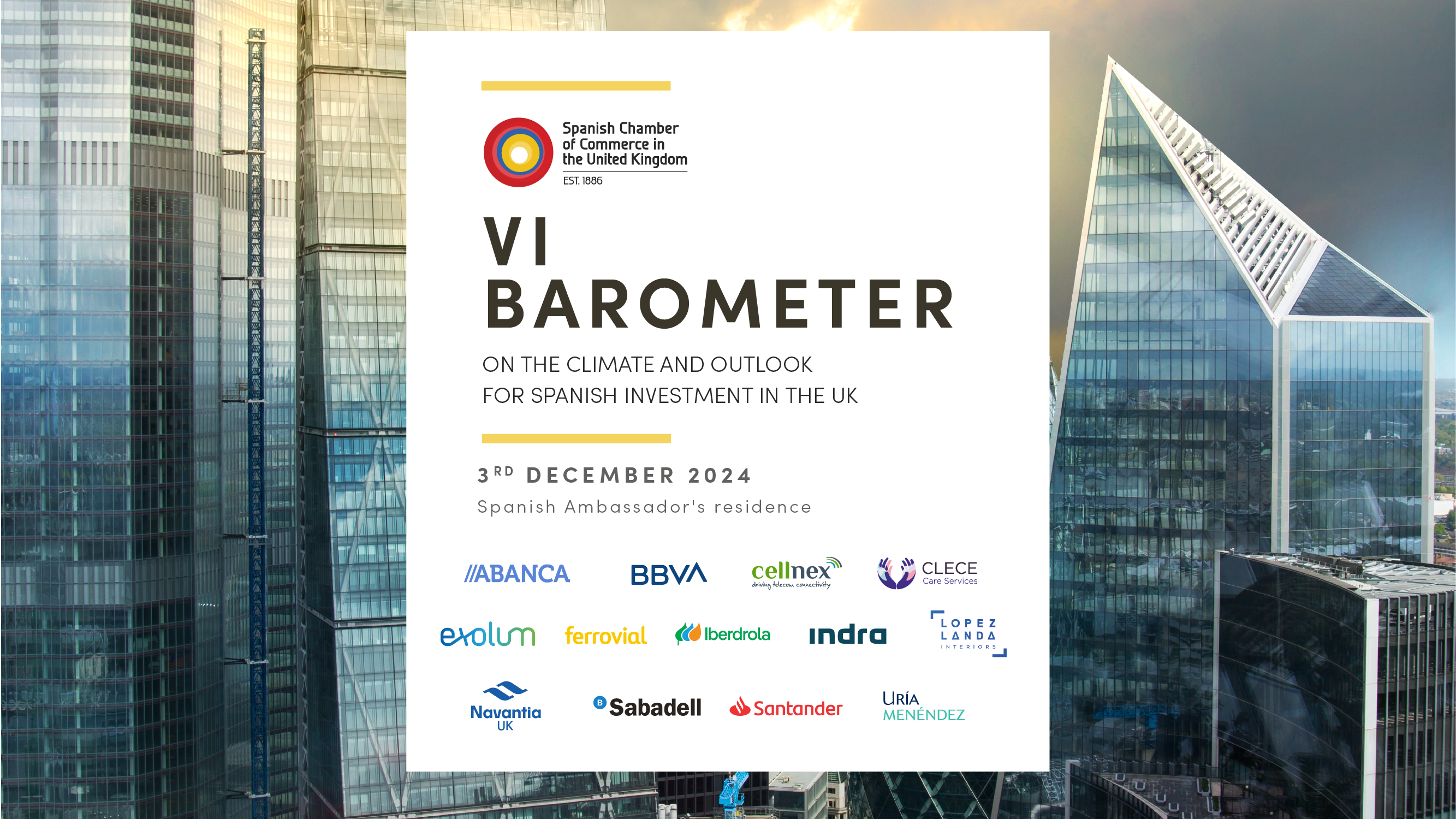
    The Spanish Chamber of Commerce in the United Kingdom has today presented the sixth edition of the ‘Barometer on the Climate and Outlook for Spanish Investment in the UK’. The event, held at the Residence of the Spanish Ambassador in London, served as a meeting point for representatives from both the public and private sectors of both countries.  

    The Spanish Ambassador to the UK, H.E. Mr. José Pascual Marco, opened the presentation of this sixth edition, followed by the President of the Spanish Chamber of Commerce in the United Kingdom, Mr. Eduardo Barrachina. The event was also attended by the UK Minister of State for Business and Trade, Mr. Douglas Alexander MP, the Spanish Minister for Trade, Ms. Amparo López Senovilla, and the Earl of Kinnoull.  

    The roundtables were moderated by Peter Foster, Public Policy Editor at the Financial Times. These technical disccussions involved: Ms. Beatriz Casares Echenique (BBVA), Ms. Yufan Cai (EXOLUM), Mr. José Jacinto Monge Bravo (INDRA), Mr. Brian Magson (Sabadell UK), Ms. Hazel Gulliver (Scottish Power), Mr. Juan Carlos Machuca (Uría Menéndez), Mr. Gonzalo García Andrés, (Oficina Económica y Comercial de España en el Reino Unido), and Ms. Cathryn Law (Department for Business & Trade).  

    The presentation also included the participation of Mr. José Manuel Amor, Board Member and Treasurer of the British Chamber of Commerce, and Ms. María Romero Paniagua, both Managing Partners at Analistas Financieros Internacionales (Afi). 

    An Essential Analytical Tool  

    This report, published by the Chamber since 2019, includes the most recent data available on Spanish investment in the United Kingdom, along with the perceptions of Spanish companies investing in the UK, collected through a survey of over 100 companies operating in the country. The Barometer has become a key tool for analysing Spanish investment in the UK, serving as an important document for investors, businesses, media, and analysts.  

    Key Findings of the Sixth Barometer  

    According to the sixth edition of the Barometer and the latest  official data available, in 2022 the United Kingdom accounted for 14.5% of Spain’s foreign direct investment (FDI) stock, amounting to €79.5 billion. The UK is the second-largest destination for Spanish investment, just behind the United States, which accounts for 14.9%.  

    Since records began in 1993, the United Kingdom has received more than €169 billion in Spanish direct investment. Despite the slowdown in investment following Brexit, the UK continues to be the primary destination for Spanish investment historically.  

    In terms of the impact of Spanish investment in the United Kingdom, in 2022 it contributed to the creation and maintenance of nearly 133,000 jobs, with 75,910 of those being direct jobs. This represents 0.4% of all jobs in the UK. This figure is an improvement on the 121,000 jobs associated with Spanish investment in 2021.  

    Regarding Spanish direct investment flows, official data confirms an increase in the first half of 2024, following the decline in 2023. Comparing the first half of 2023 with the same period in 2024, Spanish investment flows into the UK have increased twelvefold this year. By sector, the main recipients of Spanish investment in the first half of 2024 have been telecommunications, real estate, and air transport.  

    Spanish Companies’ Outlook  

    For the second consecutive year, the Spanish companies surveyed maintain a positive view of the business climate in the United Kingdom, with three out of four describing it as at least “acceptable.” When asked about the UK market, the companies highlighted the ease of digitalisation processes, with sustainability now added as a key focus in 2024. However, the quality of life was rated as the least positive aspect this year.  

    As for challenges, inflation remains the biggest issue for nearly half of the companies surveyed in 2024. In addition, the shortage of personnel has become a more prominent issue, with 36% of companies identifying it as their main challenge, 10 percentage points higher than in 2023.  

    Regarding expectations for the new Labour government, Spanish companies have identified two key priorities: relations between the UK and the European Union and UK labour market policies.  

    Looking ahead to 2025, business expectations for the next year are positive. More than half of the companies surveyed expect to increase their revenue, investments, and workforce in the UK. These investments, focused primarily on improving productivity (the goal of 40% of firms), will mainly target areas such as marketing, digitalisation, and recruitment. London and its metropolitan area will continue to be the primary focus for these initiatives. 

    Finally, it is worth noting that the vast majority (93%) of Spanish companies established in the United Kingdom consider the country to be a strategic market for their business.  

    The sixth edition of this report was supported by ABANCA, BBVA, Cellnex, Clece Care, Exolum, Ferrovial, Iberdrola, Indra, López Landa Interiors, Navantia, Banco Sabadell, Banco Santander, and Uría Menéndez.

    You can access the VI Barometer on Climate and Outlook for Spanish Investment in the UK via this link.

    You can access the last editions of the Barometer here.

  • HAGUE 2019 CONVENTION: POSITIVE NEWS FOR UK AND EU BUSINESSES

    HAGUE 2019 CONVENTION: POSITIVE NEWS FOR UK AND EU BUSINESSES

    BLOG POST WRITTEN BY ALEX GUEST, FROM CHAMBER BENEFACTOR SIGNATURE LITIGATION.

    International legal framework

    The establishment of an adequate international legal framework for the circulation of civil and commercial judgments, which provides for legal certainty and easy access to justice, has been highlighted by businesses as an important factor in attracting investment and promoting international commercial relations.

    The absence of such international legal framework has led to:

    • Businesses which are a party to a litigation being denied access to rights and remedies, despite succeeding in their litigation.
    • The issuing of new and unpredictable court proceedings in another State, simply to obtain relief to which businesses had already established entitlement.
    • An increase in costs, including the costs of taking foreign legal advice on enforcement of the judgment.
    • Delays.
    • Uncertainty.
    • Increasingly complicated transactional arrangements.
    • Obstructions to the flow of international trade and investment.

    The need for a comprehensive and private international framework covering civil and commercial judgments has become apparent, following the convolution and unpredictability introduced to UK and EU businesses by Brexit. However, this is likely to change with the UK signing the 2019 Hague Convention on the Recognition and Enforcement of Foreign Judgments in Civil or Commercial Matters (“the Convention”) on 12 January 2024, following its decision on 23 November 2023 to join it.


    The Convention

    The Convention is an international agreement which requires that a judgment given by a court of a Contracting State must be recognised and enforced in another Contracting State, without any review of the merits of the judgment, subject to limited grounds for refusal of recognition and enforcement.

    The Convention only applies to the recognition and enforcement of judgments relating to civil or commercial matters, and it excludes various matters such as revenue, customs or administrative matters, defamation, intellectual property, privacy, the carriage of passengers and goods, marine pollution, insolvency, certain anti-trust (competition) matters, and arbitration and related proceedings.

    The Convention is in force in the EU (except Denmark) and Ukraine, and it is due to enter in force in Uruguay in October this year. It has also been signed by Israel, Costa Rica, Montenegro, North Macedonia, the Russian Federation, and the United States, but is not yet in force in those states.


    The Convention will be in force in the UK twelve months after ratification, so, if ratified this year, it may be introduced as early as 2025. Thereafter, the Convention will only apply to any English judgment obtained in proceedings instituted while the Convention has been operational in the UK.

    What does it mean for EU and UK businesses?

    The fact that the UK has signed the Convention (which, let’s not forget, includes the EU as a Contracting State) should be positive news for UK and EU businesses, as it:

    1. a) Offers greater legal certainty to businesses involved in international transactions by providing a clear framework which ensures most civil and commercial judgments are recognised and enforced.
    2. b) Simplifies the process of enforcing foreign judgments in contracting states.
    3. c) Provides legal certainty and predictability to businesses involved in cross-border transactions, by setting out commonly accepted conditions for recognition and enforcement, as well as grounds for refusal. It clarifies whether, and to what extent, a judgment delivered by a court of a Contracting State will be recognised and / or enforced in another Contracting State.
    4. d) Improves access to justice by ensuring the recognition and enforcement of foreign judgments, thus reducing legal deadlines, costs, and risks in cross-border circumstances.

    It is probable the Convention will change the rules regarding the enforcement and recognition of judgments and subsequently assist to unravel the complexity and uncertainty caused by Brexit. However, this does not mean we are back to the “free pass” pre-Brexit regime (Brussels Recast and Lugano Convention), and businesses need to be aware that they may still encounter issues, such as:

    • Parallel proceedings and conflicting judgments from different jurisdictions, as the Convention does not assist with the determination of the correct jurisdiction in which a dispute should be heard.
    • The Convention’s lack of assistance in the international recognition and enforcement of interim measures (such as injunctions or interim payment orders), unlike Brussels Recast and the Lugano Convention.
    • The allowance for a Contracting State to make exceptions to enforcement on public policy grounds.


    Overall, whilst the Convention promotes a positive national and international environment for multilateral trade, investment and mobility, businesses should still carefully consider cross-border enforcement issues, both when agreeing dispute resolution provisions in contracts, and when a dispute arises.

  • English Language & Spanish Language Day – 23rd April 2022

    English Language & Spanish Language Day – 23rd April 2022

    BLOG POST WRITTEN BY QUALITY SPANISH TRANSLATIONS

    This coming Saturday 23 April we celebrate both English Language Day and Spanish Language Day.

    A relatively unknown initiative, the UN established Language Days in 2010, to celebrate multilingualism and cultural diversity as well as to promote equal use of the organisation’s six official languages.

    The date 23 April was chosen as it marks the anniversary of the death of Miguel de Cervantes Saavedra, in Spain and coincidentally, the birth and death of William Shakespeare, in England.

    These two giants of literature are apt symbols not just because of their traditional place in the canon but because of how they demonstrate the power of language in culture, politics and business. Their works continue to influence far beyond their lifetimes.

    Since the golden days of the 1600s, Shakespeare’s works have been translated into more than 100 languages, including, of course, Spanish. His characters and phrases have become part of every-day culture and philosophy in multiple countries. Universities and even global corporations use Shakespeare’s dramas in their business courses and staff training sessions, to examine creativity, innovation, emotional intelligence, teamwork and ethics.

    Cervantes’ infamous characters, Don Quixote and Sancho Panza are equally entrenched the western world’s understanding of culture and humanity, and the novel itself is said to have given rise to the modern Spanish language. Adaptations of Don Quixote feature in films, ballets, even manga comics, and the lessons he learned (or failed to learn) still help us understand the world around us, whether that’s tilting at windmills or questioning the rights and wrongs of chivalry.

    Today, of course, the world is much changed from when Old Castilian was still spoken and modern English was emerging. The average lifespan then was only around thirty years and illiteracy is estimated to have been over 70% in men and 90% in women.

    Spanish and English are now arguably the most influential languages in the world (with Chinese close behind). Although English is the most widely spoken language globally, Spanish has the most native-speakers, at 493 million.

    One of the most influential tools for enabling multilingualism and cultural diversity is the internet. Spanish is now the third-most used language online, after English and Chinese. And one of the newest languages – emoji – now has over 260 Latino emojis, inspired by Spanish-speakers in Argentina, Colombia, Cuba, Mexico, Puerto Rico and Venezuela, with more apparently being developed from El Salvador, the Dominican Republic and Uruguay.

    Language and identity go hand in hand, and it is well established that people feel more comfortable communicating in their native language. Cross-border communication and understanding therefore requires multilingualism and translations between languages and cultures. Why not take some time to learn something new about the English or Spanish language this Sat 23 April? Maybe start with a little Shakespeare, or perhaps a new emoji.

    Quality Spanish Translations is a translation and language services company based in the UK. Click here to learn more about their services.


  • TRADE TIPS | ANALYZING THE IMPACT OF THE COVID-19 CRISIS IN THE HOSPITALITY INDUSTRY OF THE UNITED KINGDOM

    TRADE TIPS | ANALYZING THE IMPACT OF THE COVID-19 CRISIS IN THE HOSPITALITY INDUSTRY OF THE UNITED KINGDOM

    After many months full of economic uncertainty, there is little doubt that the global pandemic of Covid-19 has had a crippling effect on lots of businesses across the UK. We can see that the impact of the pandemic has affected companies from a huge variety of sectors such as retail, education, transport, manufacturing, health and beauty… However, it is also true that certain industries have been affected much more than others. One example of this is the hospitality sector, an industry that has been severely impacted by the lockdown and heavily suffered from the devastating consequences of the Covid-19 crisis.

    This trade tip delivered by the Spanish Chamber of Commerce in the United Kingdom will give you lots of useful tips to make sure that you are equipped with the accurate tools to enter the new year much stronger while building your strategy for recovery. Without doubt the hospitality sector as a whole is on the road to recovery. So, let’s collaborate and welcome the future together.

    Watch the presentation here. 


  • BLOG POST | LEADERSHIP OR ENTREPENEURIAL LEADERSHIP?

    BLOG POST | LEADERSHIP OR ENTREPENEURIAL LEADERSHIP?


    Leadership or Entrepreneurial Leadership?
    Entrepreneurs have become the new heroes of the business world.

    At Harvard Business School, even students who plan to join blue chip firms and have no intention of ever launching start-ups would be insulted if someone told them they weren’t “entrepreneurial.” And this is why: Entrepreneurialism is highly valued in today’s labour market. Companies of all shapes and sizes aspire to be seen as highly innovative, nimble, and agile—all qualities traditionally ascribed to entrepreneurs.

    Yet in their recruiting efforts, companies do not have a scientific way of separating true entrepreneurs from other talented candidates. Instead, they fall back on broad stereotypes.

    But what is Entrepreneurial Leadership?

    In 2004, Chris Roebuck defined entrepreneurial leadership as “organizing a group of people to achieve a common goal using proactive entrepreneurial behaviour by optimising risk, innovating to take advantage of opportunities, taking personal responsibility and managing change within a dynamic environment for the benefit of [an] organisation”.

    Entrepreneurial leaders may work within a formalised organisation structure. But they use the skills and approaches associated with successful entrepreneurs.

    Why do we need Entrepreneurial Leadership?

    The answer is relatively simple. To keep up with the swift pace of change in the world, we need forward thinking, creativity and innovative ideas.
    In today’s fast-changing world, leaders need to be agile. You need to be able to make decisions quickly, take action and learn from the results. You need to anticipate the future, respond to unforeseen circumstances and adapt to change.

    That relies on entrepreneurial leadership.

    In other words, entrepreneurial leadership is like white water rafting. To ride the waves of change, you need a strong sense of purpose and motivation. You need a committed and effective team. And you need the agility to respond quickly and change direction when needed.

    And for that reason, entrepreneurial leadership is not just for start-ups. It’s for all organisations.

    Some of the common entrepreneurial leadership characteristics are as follows.

    1. COMMUNICATION SKILLS:
      The leader is able to clearly articulate their ideas, and the plan to achieve common goals. They encourage communication between departments and across levels. They avoid ambiguities and generalizations, and are able to avoid conflict and misunderstanding due to poor communication
    2. VISION:                                                                                                                                                                                      A successful entrepreneurial leader has a clear vision. He knows exactly where he wants to go and how to get there. They communicate their vision to the team and work with them to make the vision a reality.
    3. SUPPORTIVE:
      An entrepreneurial leader realizes the importance of initiative and reactiveness, and they go out of their way to provide all the support that the team needs to achieve their goals. The leader usually does not punish employees when they take a calculated risk which misfires. Instead, they sit down with employees to analyse what went wrong and work with them to correct the mistakes.
    4. SELF-BELIEF:
      The leader has tremendous belief in themselves and has confidence gained from years of experimenting, at times failing, and learning. They are aware of their strengths and weaknesses, and demonstrate their skills without hubris. An entrepreneurial leader is very self-assured.
    5. SHARES SUCCESS:
      When the team or the organization succeeds at something, the leader does not hog the limelight or take all the credit. They acknowledge the contribution of others and share the accolades with them.
    6. INVOLVED:
      You will not find an entrepreneurial leader cooped up in the office. Leaders like to spend time among employees, walk around the factory or department, interact with everyone, and see them doing their job. This leader will usually take some time out to informally chat with employees, and understand their work and personal challenges.
    7. CREATE AN ATMOSPHERE CONDUCTIVE TO GROW:
      With a deep understanding of the importance of other people’s contribution to organizational success, the entrepreneurial leader creates an atmosphere that encourages everyone to share ideas, grow, and thrive. They actively seek other’s opinions, and encourage them to come up with solutions to the problems that they face. The entrepreneurial leader also provides positive feedback when employees come forward with an opinion.
    8. HONESTY:
      Honesty is the most important quality of an exceptional leader. Entrepreneurial leaders who are honest are able to quickly win the trust of their employees. People respect leaders to come across as honest, and are more likely to accept positive or negative feedback and also work harder.
    9. PERSEVERANCE:
      When the going gets tough, the entrepreneurial leader perseveres. True entrepreneurs simply don’t quit, they keep going till they find what they’re looking for.
    10. LEARNING:
      The leader not only invests significantly in learning and updating their knowledge, but they also create a learning environment in the organization encouraging others to improve their knowledge, widen their experience, and tackle multiple challenges. They encourage employees to think outside the box and come up with creative solutions to problems.

    No matter what context you’re operating in (organisational change, new venture, setting up a family business…), entrepreneurial leadership will be central to your growth. Developing leadership skills helps develop talent, roll out new products and services, deliver efficiency and gain market share.

    Download your GUIDE Is a Lack of Self Leadership Derailing Your Organisation?

    Thanks for reading!

    Nieves

    Founder www.FastrackTorefocus.com | Corporate and Executive Coach|Career Coach |Consultant|Lecturer| Author |Mindfulness Master
    00 44 (0) 7448947145


  • BLOG POST | HAUSFELD REVEALS A NEW LOOK

    BLOG POST | HAUSFELD REVEALS A NEW LOOK

    When our member firm Hausfeld started, it set out to challenge the status quo with new alternative legal thinking, finding different ways of righting wrongs and successfully resolving disputes for its clients, driven by a bold approach and pioneering experience – and to do so in a familial and dynamic law firm culture.

    The firm grew from 1 office with 17 lawyers to 12 offices with 250+ lawyers and staff today. They recognised that it was vital to set out distinctly what they do best in a way that is relevant to their audience, and to communicate how they bring value effectively – both internally and externally – so they partnered with brand agency Living to help tell their story.

    The aim of their new visual brand is to reflect their ‘personality’ and communicate who Hausfeld is, what they do and why that matters – not just in words, but also through vision. The colours and the bespoke visuals perfectly reflect the Hausfeld values: pioneering, unconventional, pragmatic, tenacious and bold.

    • PIONEERING
      “Since our start, we’ve shaped law, transformed legal practices with new ideas and brought claims other aren’t bold enough to bring.”
    • UNCONVENTIONAL
      “Our entire ethos is atypical. We look beyond the horizon with a visionary determination to find outcomes that fit our clients’ needs.”
    • PRAGMATIC
      “Litigation is complicated but our practical and thoughtful approach, delivered by bright minds, makes disputes resolution more certain and ensures we get results.”
    • TENACIOUS                                                                                                                                                                          “We are tireless in acting for our clients and getting the best results for them.”
    • BOLD
      “We’ve always been proud of being thoughtfully rebellious. The people who join us find other firms too constricting, less enterprising and less able to innovate for their clients.”

    Hausfeld, for the challenge.


  • Brexit: Operate in Europe Through a Subsidiary or Branch

    Brexit: Operate in Europe Through a Subsidiary or Branch

    BLOG POST BY SCORNIK GERSTEIN LLP

    If you are looking to establish a presence within the European Union (EU) after Brexit, you may wish to consider setting up a branch or subsidiary in Spain (SP).

    SPANISH SUBSIDIARY OR BRANCH: WHICH IS BEST?
    The key differences to consider when choosing the type entity right for your business model, are listed below:
    • A subsidiary is an independent legal entity, responsible only for its own liabilities and debts that it incurs and the parent company is not affected by these whereas a branch is dependent on the parent company, which will be responsible for any liability that the branch incurs.
    • There is no minimum share capital amount to set up a branch in Spain. In contrast, establishing a subsidiary requires €60,000 minimum share capital for a Public Limited Company (PLC) and €3,000 for a Limited Liability Company (LLC) although the Spanish media have recently published that the government intends to reduce the minimum share capital to 1 Euro.[1]

    WHAT ARE THE MAIN REQUIREMENTS FOR OPENING A BRANCH OFFICE OR A SUBSIDIARY IN SPAIN?
    The procedure to open a subsidiary or a branch in SP is similar. The common requirements include the following:
    1. Opening a bank account in the company’s name, which will be used for depositing the share capital.
    2. A copy of the certificate of incorporation of the parent company.
    3. Obtain (the provisional) and then keep (the definitive) tax identification NIF (número de identificación fiscal) at the Spanish Tax Agency.

    The decision of setting up a subsidiary or a branch has to be taken by a general meeting of the shareholders of the parent company and the resolution must be legally translated into Spanish.
    Public deed of incorporation must be granted before a Notary Public and then submitted at the Spanish Commercial Registry.

    MUST I TRAVEL TO SPAIN TO SET UP A SUBSIDIARY OR A BRANCH?
    Not necessarily, our team of Spanish speaking lawyers can set up for you a subsidiary or a branch in Spain on behalf of the parent company, through a Power of Attorney.

    If you wish to keep updated about the new rules and new opportunities generated by Brexit, please register your interest atwww.thebrexitlaw.com

    SCORNIK GERSTEIN LLP is offering all the members of the Spanish Chamber of Commerce in the UK a 25% discount on all our professional legal services until 31.05.2021.

    For further information, please click below 

    [button link=”#https://spanish.en-desarrollo.net/oferta/discount-legalwork/” newwindow=”yes”] Learn More[/button]


Este sitio web utiliza cookies para que usted tenga la mejor experiencia de usuario. Si continúa navegando está dando su consentimiento para la aceptación de las mencionadas cookies y la aceptación de nuestra política de cookies, pinche el enlace para mayor información.plugin cookies

ACEPTAR
Aviso de cookies