Category: News

  • NEW PATRON MEMBER: Clece Care Services

    NEW PATRON MEMBER: Clece Care Services

    The Spanish Chamber of Commerce was delighted to recently welcome Clece Care Services as a new Patron.

    Clece Care Services is a leading UK essential services provider, operating across 100 locations with a workforce of 8,000 supporting over 12,000 service users. As part of the Spanish Clece Group, they proudly deliver high-quality, person-centred care and specialist support. Alongside being a leading care provider, Clece Care Services delivers facilities management, cleaning, and airport services across the UK, making them a trusted essential services partner. Clece Care Services champion sustainable, efficient, and socially responsible operations that generate lasting value for communities. Learn more at www.clececare.co.uk.


    Could you provide a brief overview of Clece Care Services and its presence in the UK market?

    Clece Care Services is part of Clece Group, one of Europe’s largest providers of social and support services. With a huge presence in Spain and Portugal, Clece employs 88,000 people and delivers healthcare, social care, cleaning, facilities, and education services to millions, setting a benchmark for quality and innovation.

    In the UK, Clece Care Services is the leading provider of person-centred care. Operating in over 100 locations, we employ more than 7,000 dedicated staff who support over 12,000 people to live with dignity and independence at home or residential schemes. We are proud to work with more than 100 local authorities and serve as a trusted NHS partner. Combining the international expertise of Clece with deep local roots, we deliver high-quality services that make a lasting difference to individuals and communities.


    As a new Patron of the Spanish Chamber of Commerce (UK), what benefits do you hope to gain from our collaboration?

    Becoming a Patron of the Spanish Chamber of Commerce in the UK is an important step for Clece Care Services. It allows us to strengthen links between the Spanish and British business communities while raising awareness of the essential role we play across both societies. As part of Clece Group, we are proud to represent an organisation with deep expertise in Spain and Portugal and a growing presence in the UK.

    We see the Chamber as a platform for knowledge exchange and collaboration with like-minded businesses. By engaging with leaders in innovation and sustainability, we aim to share best practice, foster partnerships, and highlight the critical contribution of care to the economy. This relationship will also help us explore cross-sector opportunities, develop stronger networks, and position Clece Care Services as a values-driven organisation with a progressive outlook.


    What key values define your company, and how are these values integrated into your daily operations and customer interactions?

    Our core values – Respect, Transparency, Empowerment, Safety, Environment, and Efficiency – shape every part of Clece Care Services. These principles guide our interactions with clients, families, and staff, ensuring dignity, openness, and compassion are central to everything we do.

    We are proud to be the only UK care provider completing the Social Value Quality Mark, a unique achievement that demonstrates our leadership in community impact.

    Our business is powered by people, and we are passionate about creating opportunities for those who need them most. Through our renowned training academies and professional development schemes, we open pathways into long-term employment and career growth. This commitment makes us an employer of choice, recognised nationally for supporting staff and investing in future talent. By embedding our values into practice, we deliver real impact for individuals and communities every day.


    How does Clece Care Services stand out in the UK care and support sector, and what specific approaches or initiatives help you deliver exceptional services to your clients?

    Clece Care Services stands out for our scale, expertise, and strong reputation as one of the UK’s leading essential services providers. Operating in more than 100 communities, we deliver reliable, person-centred care alongside complementary services such as cleaning, facilities management, and airport support. Our breadth of expertise makes us a trusted partner for both individuals and public organisations.

    We are driven by governance, technology, and innovation, which ensure we remain ahead of the curve in service delivery. Investment in digital tools and robust governance frameworks underpin safety, efficiency, and consistent quality. At the same time, our commitment to professional development empowers staff to deliver exceptional care. This combination of international expertise, scale, and innovation ensures we provide trusted services that improve lives daily while meeting the complex needs of modern communities.


    What is Clece Care’s vision for the future, and what specific strategies or actions are you implementing to achieve it?

    Our vision at Clece Care Services is to set the standard for integrated, socially responsible services in the UK. We aim to deliver services that go beyond meeting basic needs to genuinely enriching lives and strengthening communities. Across our operating locations, we are focused on sustainable growth while ensuring a personal, local approach.

    To achieve this, we are investing in digital innovations that improve safety, efficiency, and client outcomes. Workforce development remains central to our strategy, empowering our colleagues to progress through training and career opportunities. We are also committed to sustainability, embedding practices that reduce our environmental footprint and create long-term value. By combining compassionate support with innovative solutions, Clece Care Services is building a future where essential services benefit both individuals and the wider community in meaningful ways.


  • Explaining Britain to Spain: Inside the Work of London’s Correspondents

    Explaining Britain to Spain: Inside the Work of London’s Correspondents

    What does it mean to explain the UK to Spain? For decades, Spanish correspondents based in London have carried that responsibility – translating political drama, cultural quirks and economic shifts into stories that resonate back home. Whether through television, print or agencies, their reports have helped shape Spain’s understanding of modern Britain and its place in the world.

    Starting the Journey – Why London?

    Several of today’s longest-serving reporters arrived well before Brexit pushed the UK to the centre of headlines. Ainhoa Paredes of Telecinco has been based here since 2006, covering every prime minister from Tony Blair onwards. A year later, Celia Maza (La Razón / El Confidencial / Onda Cero) settled into what she describes as “a window onto international affairs” – where the UK–Spain relationship constantly overlaps with global Britain. In 2008, Eva Millán (Antena 3) took on the challenge of one of the world’s toughest media hubs – convinced that London was the rare place where politics, economics and culture could be covered in one beat.

    The uncertainty of leaving the EU drew a new wave. Rafa de Miguel (El País) returned to frontline reporting in 2018, while Enrique Rubio (Agencia EFE) arrived in 2020 after postings in Washington, Cairo, Rabat and Paris. He stepped straight into covering Brexit negotiations, the pandemic and relentless political turnover in Downing Street. During the same period, Diego Arizpeleta (RTVE) began his first foreign post under lockdown conditions, and in 2023 Artur Zanón (Expansión) arrived to follow the financial flows connecting Spain and Britain.

    Different backgrounds, but one shared conviction: London is more than a foreign assignment. It is where the story of two nations, deeply intertwined, can be told in real time.

    Ainhoa Paredes, Telecinco
    Celia Maza, La Razón · El Confidencial · Onda Cero

    Bridging Two Worlds

    Eva Millán, Antena 3

    For Spaniards, Britain feels both familiar and foreign – close enough to recognise, yet different enough to need decoding. Correspondents step in not just to report facts, but to interpret traditions, institutions and public debates.

    That role is especially visible on television. For Paredes, a live shot from Parliament or Trafalgar Square acts as soft diplomacy. Millán describes her job as “translating reality” – breaking down complex British customs into a few seconds on air. The Royal Family remains one of the most recognisable reference points, helping Spanish viewers grasp an otherwise unfamiliar system.

    Each correspondent approaches Britain through a different lens. Maza highlights parallel debates between Spain and the UK – from lowering the voting age to new housing models – showing how the two societies can learn from each other. De Miguel insists on the need for context: with English-language news only a click away, his task is to connect stories of unrest, inequality or the rise of parties like Reform UK to wider social trends. For Zanón, the challenge is economic translation: explaining why Britain invests in nuclear power while Spain phases it out, or what City tax reforms mean for investors. His readers expect facts, but also implications.

    Together, their work shows correspondents as cultural interpreters as much as reporters – building bridges that reveal how Spain and the UK mirror, and sometimes challenge, one another.

    The Business Lens

    Natasha Tinsley (left), Communications and Events Assistant at the Chamber, with Rafa de Miguel (right), El País

    That interpretive role has direct implications for business. Reports from London not only flag risks such as Brexit or regulatory change, but also spotlight Spanish success abroad – stories that reinforce Marca España and deepen economic ties.

    Many of the journalists highlight Spain’s imprint on British infrastructure, from Ferrovial’s work on the Elizabeth Line to Santander’s nationwide presence. Rubio underlines the value of companies sharing their achievements with the press, which strengthens Spain’s profile overseas. Arizpeleta notes how sudden political shifts in Westminster can sway investor confidence, while Paredes points out that television images – whether of protests or security alerts – shape perceptions of Britain for tourists and potential relocators. For Maza, the most decisive stories are often the everyday ones: housing shortages, childcare costs, immigration rules – all factors that directly inform corporate strategy.

    Behind the Scenes: Life as a Correspondent

    Enrique Rubio, Agencia EFE

    But the role isn’t only about analysing economies or diplomacy. Behind every dispatch is the daily reality of the correspondent’s grind – phones that never switch off, deadlines that never wait. Paredes jokes she has spent so much time outside Downing Street that she could have pitched a tent. Rubio describes the constant battle for access, with foreign reporters often facing restricted opportunities. Yet the relentless pace comes with unique privilege: front-row seats to global summits and moments of historic change. As Millán reflects, Britain itself has shifted dramatically during her years in London – from the optimism of the 2012 Summer Olympics to the disillusionment of Brexit’s stalled promise.

    Defining Moments

    Certain events stand out as turning points in their coverage. For De Miguel, nothing matched Britain’s break with Europe – the “story of the decade” that dominated headlines and reshaped the lives of Spaniards in the UK. Millán singles out the death of Queen Elizabeth II, recalling it as the moment that echoed most profoundly across Spanish media. Arizpeleta describes the Boris Johnson years as a “media goldmine” – a sharp contrast to the calmer politics under Keir Starmer. And when Westminster falls quiet, correspondents turn to other stories – from culture to the City, and from Gibraltar to football, where Spanish names have become fixtures in the Premier League.

    Diego Arizpeleta (left), RTVE, with Natasha Tinsley (right), Communications and Events Assistant at the Chamber
    Artur Zanón, Expansión

    UK–Spain Ties

    The role of these journalists will remain essential: not only in explaining the UK to Spain, but in showing how two nations so close – and yet so different – continue to learn from one another. They are both analysts and storytellers, translating British realities into Spanish contexts while placing shared challenges and successes within a wider narrative of opportunity.

    Blog post written by Natasha Tinsley

  • SCCUK Annual Reports: Key Highlights and Insights

    SCCUK Annual Reports: Key Highlights and Insights

    Since 2018, the Spanish Chamber of Commerce in the United Kingdom has published an Annual Report each year, offering a comprehensive overview of our work and achievements.

    Within each edition, you will find: 

    • A detailed overview of the Chamber’s services
    • An in-depth summary of all events and activities organised throughout the year, highlighting the participation of our Member
    • Exclusive interviews with Members
    • An updated directory with the latest contact details of all Chamber Members

    These reports serve both as a reflection of the past year and as a valuable resource for our community. 

    You can explore each edition below: 


    [button link=”https://spanish.en-desarrollo.net/wp-content/uploads/2019/07/annual_report_2018.pdf” newwindow=”yes”] Annual Report 2018[/button]


    [button link=”https://www.yumpu.com/en/document/read/63093813/annual-report-2019-spanish-chamber-of-commerce-in-the-uk” newwindow=”yes”] Annual Report 2019[/button]


    [button link=”https://spanish.en-desarrollo.net/wp-content/uploads/2021/04/AnnualReport_2020-1.pdf” newwindow=”yes”] Annual Report 2020 [/button]


    [button link=”https://spanish.en-desarrollo.net/wp-content/uploads/2022/09/AnnualReport_2021_adjusted_final.pdf” newwindow=”yes”] Annual Report 2021[/button]


    [button link=”https://spanish.en-desarrollo.net/wp-content/uploads/2023/07/AnnualReport_2022.pdf” newwindow=”yes”] Annual Report 2022[/button]


    [button link=”https://spanish.en-desarrollo.net/wp-content/uploads/2024/06/AnnualReport_2023.pdf” newwindow=”yes”] Annual Report 2023[/button]


    [button link=”https://spanish.en-desarrollo.net/wp-content/uploads/2025/07/AnnualReport_2024_1-1.pdf” newwindow=”yes”] Annual Report 2024[/button]

  • Autorización Electrónica de Viaje para el Reino Unido: todo lo que necesitas saber para viajar desde 2025

    Autorización Electrónica de Viaje para el Reino Unido: todo lo que necesitas saber para viajar desde 2025

    Desde el 2 de abril de 2025, todos los ciudadanos europeos, y por tanto los españoles, deben obtener una Autorización Electrónica de Viaje para entrar en el Reino Unido, ya sea por turismo, negocios, estudios de corta duración o incluso para hacer escala. 

    En esta guía, la Cámara de Comercio de España en el Reino Unido responde a las preguntas más frecuentes: quién necesita una Autorización Electrónica de Viaje , cómo solicitarla, cuánto cuesta, cuál es su periodo de validez y dónde encontrar información oficial en español. 


    ¿Qué es la Autorización Electrónica de Viaje? 

    La Electronic Travel Authorisation es un permiso digital que se exige a las personas que no necesitan visado para poder visitar el Reino Unido con una estancia máxima de seis meses. 

    Se enmarca en el proceso de modernización de las fronteras británicas, con un sistema completamente digital similar al de Estados Unidos (ESTA), Canadá (eTA) y Australia (ETA).


    ¿Debo pedir el documento Autorización Electrónica de Viaje?
     Debes tramitar la Autorización Electrónica de Viaje si:

    • Eres ciudadano español (o de otro país exento de visado). 
    • Viajas al Reino Unido por turismo, negocios, estudios de corta duración o para visitar a familiares o amigos (estancias de hasta seis meses). 
    • Haces escala en el Reino Unido y necesitas pasar el control fronterizo. 
    • No dispones de visado británico ni de estatus migratorio (por ejemplo, residencia o pre-residencia bajo el EU Settlement Scheme).


    ¿Desde cuándo está en vigor este requisito? 

    La obligación de contar con la Autorización Electrónica de Viaje para los ciudadanos españoles rige desde el 2 de abril de 2025. Toda persona que cumpla los requisitos deberá disponer de un documento Autorización Electrónica de Viaje válido antes de embarcar hacia el Reino Unido. 

    ¿Cómo solicito la Autorización Electrónica de Viaje? 

    La solicitud es rápida, sencilla y completamente en línea. Para solicitarlo, necesitarás: 

    • Pasaporte biométrico válido (el tuyo lo es si ha sido expedido después de 2007) 
    • Foto reciente en formato digital. 
    • Tarjeta de crédito o débito para abonar la tasa. 


    La solicitud puede realizarse a través de la página web oficial del Gobierno británico o mediante su aplicación móvil. 


    ¿Cuánto cuesta la Autorización Electrónica de Viaje? 

    El precio de la Autorización Electrónica de Viaje es de 16 libras esterlinas por persona (algo menos de 20€) 


    ¿Cuánto tiempo es válida mi Electronic Travel Authorisation 

    La Autorización Electrónica de Viaje tiene una validez de dos años desde la fecha de emisión o hasta la fecha de caducidad del pasaporte, lo que ocurra primero. Durante este periodo, se permiten múltiples entradas al Reino Unido, siempre que cada una de estas no supere los seis meses. 


    ¿Cuánto tardaré en recibir mi Autorización Electrónica de Viaje para el Reino Unido? 

    La mayoría de las solicitudes se aprueban en un plazo máximo de tres días laborables, aunque en algunos casos pueden resolverse antes. Se recomienda solicitarla con suficiente antelación. 


    No necesitas pedir la Electronic Travel Authorisation si ya dispones de: 

    • Un visado británico válido. 
    • Estatus de residente o pre-residente bajo el EU Settlement Scheme (EUSS). 

    ¿Existen vídeos explicativos dirigidos a viajeros españoles?

    El Gobierno británico ha elaborado breves vídeos informativos en inglés en los que se explica qué es la Autorización Electrónica de Viaje, quién debe solicitarla y cómo realizar el trámite. 


    Ver ahora: 


    Mantente informado 

    Para conocer las últimas noticias, requisitos y actualizaciones del proceso: 

    La Autorización Electrónica de Viaje, en resumen: 

    • Todos los ciudadanos españoles necesitan una Electronic Travel Authorisation para viajar al Reino Unido desde el 2 de abril de 2025. 
    • Coste: £16. 
    • Solicitud en línea en cuestión de minutos.  
    • Resolución de tu solicitud en unos 3 días. 
    • Válida durante 2 años y para múltiples viajes (de hasta 6 meses cada uno) 

    Para evitar contratiempos en la frontera, se recomienda solicitar tu Autorización Electrónica de Viaje con antelación. 

    ¡Buen viaje!


    Blog post written by Natasha Tinsley

  • Join the Spanish Chamber of Commerce in the UK: Expand Your Network and Grow Your Business

    Join the Spanish Chamber of Commerce in the UK: Expand Your Network and Grow Your Business

    Are you a Spanish company looking to establish or expand in the UK? Or perhaps a British business aiming to export to Spain and strengthen your commercial ties across Europe? 

    Whatever your goals, the Spanish Chamber of Commerce in the United Kingdom provides a trusted platform to help you succeed. Our diverse network connects Spanish, British and international companies of all sizes — from SMEs to global corporations — across a wide range of industries. 

    By becoming a Member, you’ll expand your network through valuable business and institutional contacts, gain tailored advice, access exclusive events and boost your visibility through our communications and promotional channels. 

    With three membership tiers, we offer tailored solutions designed to support companies at every stage of their growth. Whether you’re entering a new market or consolidating your position, Chamber membership gives you the tools and opportunities to grow your business in the UK and Spain. 


    Explore the benefits of each membership tier:

    Corporate Membership 

    Designed for companies looking to expand their network and increase their visibility within the Spanish-British business community in London, this tier is ideal for SMEs and growing businesses seeking new connections, opportunities and a stronger presence in the UK market. 

    Corporate Membership includes a range of valuable benefits, such as: 

    • Showcase your company profile and logo on the Chamber’s official website. 
    • Receive invitations to company events hosted by the Spanish Chamber of Commerce. 
    • Access special offers and resources through the private Members’ area of our website. 
    • Promote your business by sharing events, promotions, or job vacancies across our communications channels. 
    • Join networking events, most of which are free for Members, to connect with Spanish, British and international companies. 
    • Benefit from discounts on all Chamber services and advertising packages. 


    Benefactor Membership 

    Benefactor Membership is designed for companies looking to enhance their Chamber experience and access some of the benefits of the Patron tier. This level is perfect for businesses seeking greater visibility, participation in more targeted events and opportunities to connect with senior executives in the Spanish-British business community. 

    In addition to all Corporate Membership advantages, Benefactor Members also enjoy: 

    • Prominent exposure across Chamber channels: Share your company news with our network via the Chamber’s newsletter, blog and social media platforms. 
    • Complimentary meeting room access: Use the Chamber’s facilities with up to 5 hours included annually. 
    • Priority for event partnerships: Receive preferential consideration when organising events in collaboration with the Chamber. 
    • Newsletter advertising opportunity: Feature your company in one complimentary advert in our fortnightly newsletter. 
    • Company blog features: Benefit from two dedicated blog posts highlighting your business and activities upon joining. 


    Patron Membership 

    Patron Membership is our most exclusive membership, tailored for large and multinational companies seeking maximum visibility and premium access to the Chamber’s network. This tier is ideal for organisations looking to strengthen their profile, build high-level business relationships and showcase their commitment to the Spanish-British commercial community. 

    In addition to all Corporate and Benefactor Membership benefits, Patron Members receive: 

    • Featured logo placement: Your company logo is displayed in the Chamber’s newsletter and website, with a link to your own site. 
    • Comprehensive marketing exposure: Your company name appears across Chamber marketing materials, including email signatures, corporate documents, photocalls and on-screen displays at events. 
    • Exclusive annual dinner invitation: Attend the prestigious Annual Patrons’ Dinner at the Spanish Embassy. 
    • Priority invitations for collaborative events: Receive first access to events organised with other institutions and Chambers of Commerce. 
    • Sector-focused forum access: Gain priority entry to sector-specific forums, subject to availability. 
    • Event sponsorship opportunities: Receive first choice for sponsoring Chamber events to enhance your visibility. 
    • Access to Patrons’ Club events: Connect with senior executives and decision-makers in exclusive, Members-only gatherings. 

    Why Join Us? 

    Whichever membership category you choose, joining the Chamber provides powerful tools to increase your company’s visibility and expand your network within our growing Spanish-British business community of over 250 Members. 

    While many of our events are open to non-Members, only Members receive priority access, exclusive invitations, and enhanced visibility across our network. To explore our opportunities, you can sign up for our newsletter or visit the Upcoming Events section on our website.

    If you’re ready to take the next step—or simply want guidance on which membership category suits your company best—don’t hesitate to contact us. Our Team will be happy to assist you.


    Blog post written by Natasha Tinsley and Sophie Ziliukas

  • Small Plates, Big Flavours: The Spanish Chamber’s First Tapas Tour

    Small Plates, Big Flavours: The Spanish Chamber’s First Tapas Tour

    Small Plates, Big Flavours: The Spanish Chamber’s First Tapas Tour

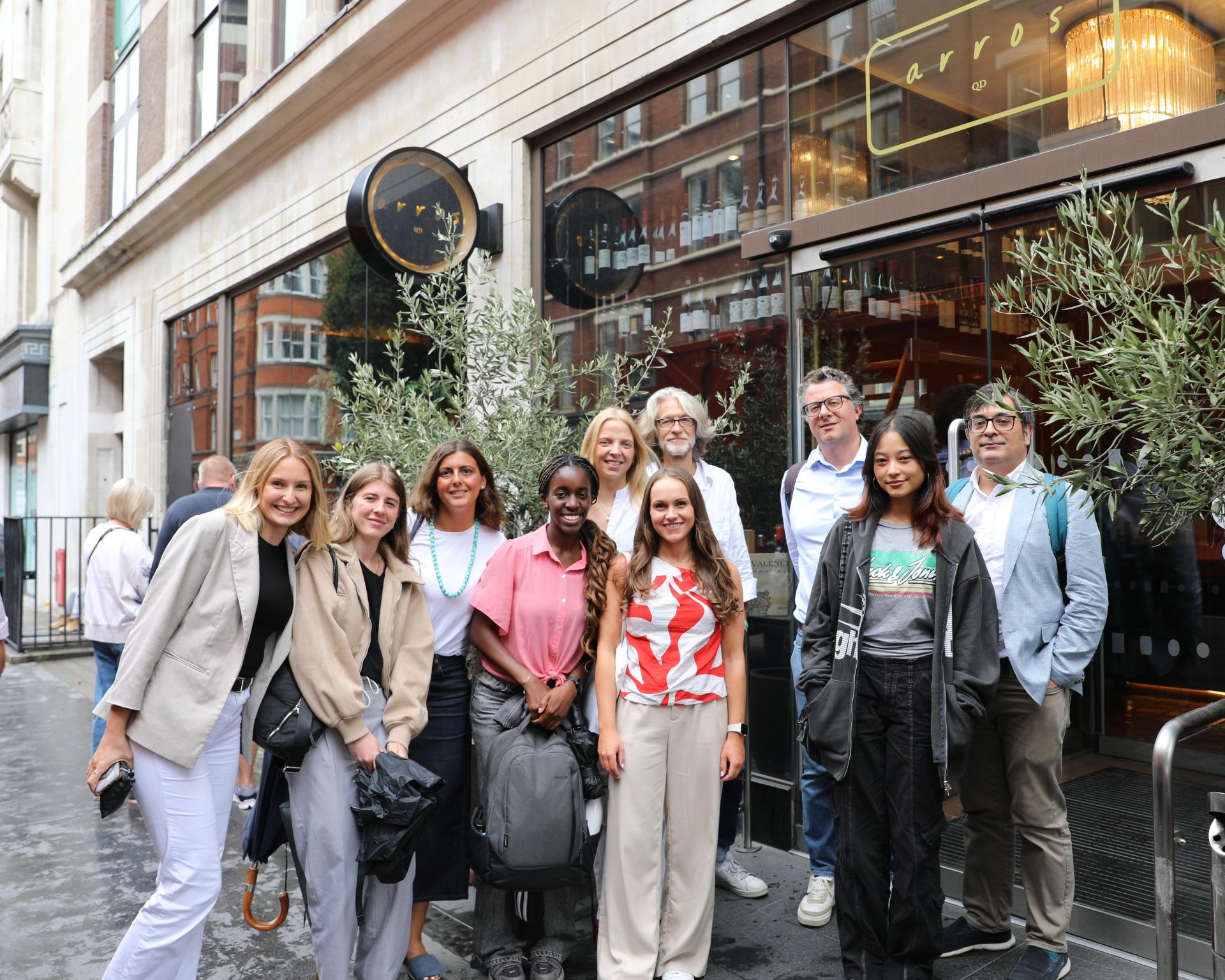
    This year, the Spanish Chamber of Commerce in the UK upped the stakes – and the servings! Introducing the Tapas Tour – five restaurants, dozens of plates, and one clear mission: to showcase the richness and diversity of Spanish cuisine in London.

    After three unforgettable editions of our Croqueta Tour, we were ready for a bigger bite. From seafood and rice to timeless Basque recipes and contemporary takes on pintxos, our Team embarked on a culinary journey that proved how Spain’s regional traditions are thriving in the UK restaurant scene.

    In just one afternoon, we visited Benefactors, Members and friends of the Chamber – each offering its own story of Spanish culture, identity and hospitality.

    Arros QD

    Our first stop was Arros QD in Fitzrovia, a Chamber Benefactor and widely hailed as the UK’s temple of paella. Here, rice takes centre stage, cooked over a spectacular six-metre wood-fire stove that lends the dining room both warmth and elegance.

    Two rice dishes stood out: one earthy with wild mushrooms, the other rich with txangurro. Dessert came with a daring twist: a Basque cheesecake infused with Gorgonzola – indulgent and perfect for sharing.

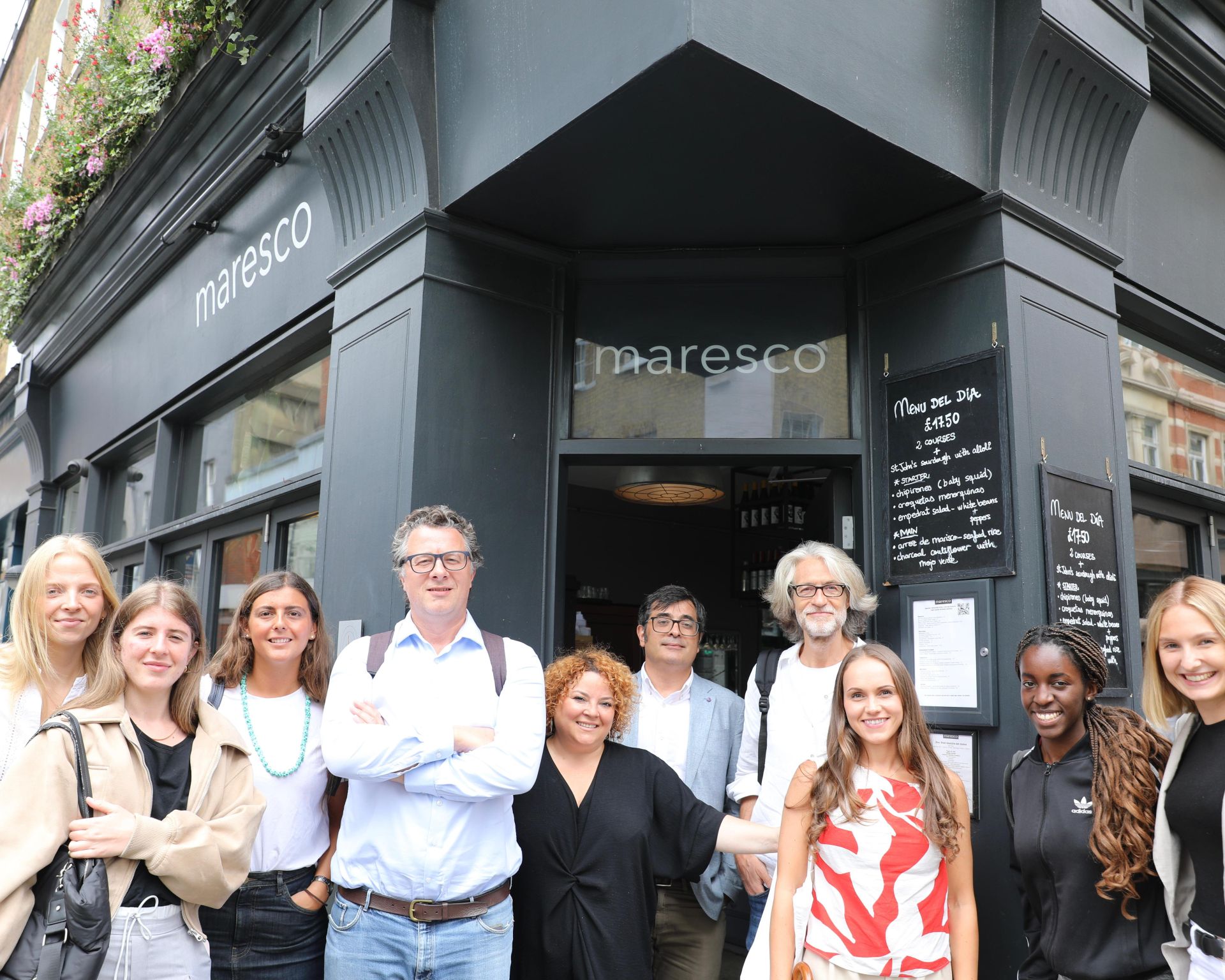
    Maresco

    Our journey continued at Maresco in the heart of Soho. Its very name – fusing mar (sea) with Esco from Escocia (Scotland) – captures the restaurant’s essence: the finest Scottish seafood paired with Spanish creativity.

    Guided by operations manager Naroa Ortega, we sampled Menorcan sobrassada croquetas and fried Basque peppers – irresistible flavours that embody the spirit of cross-cultural gastronomy.

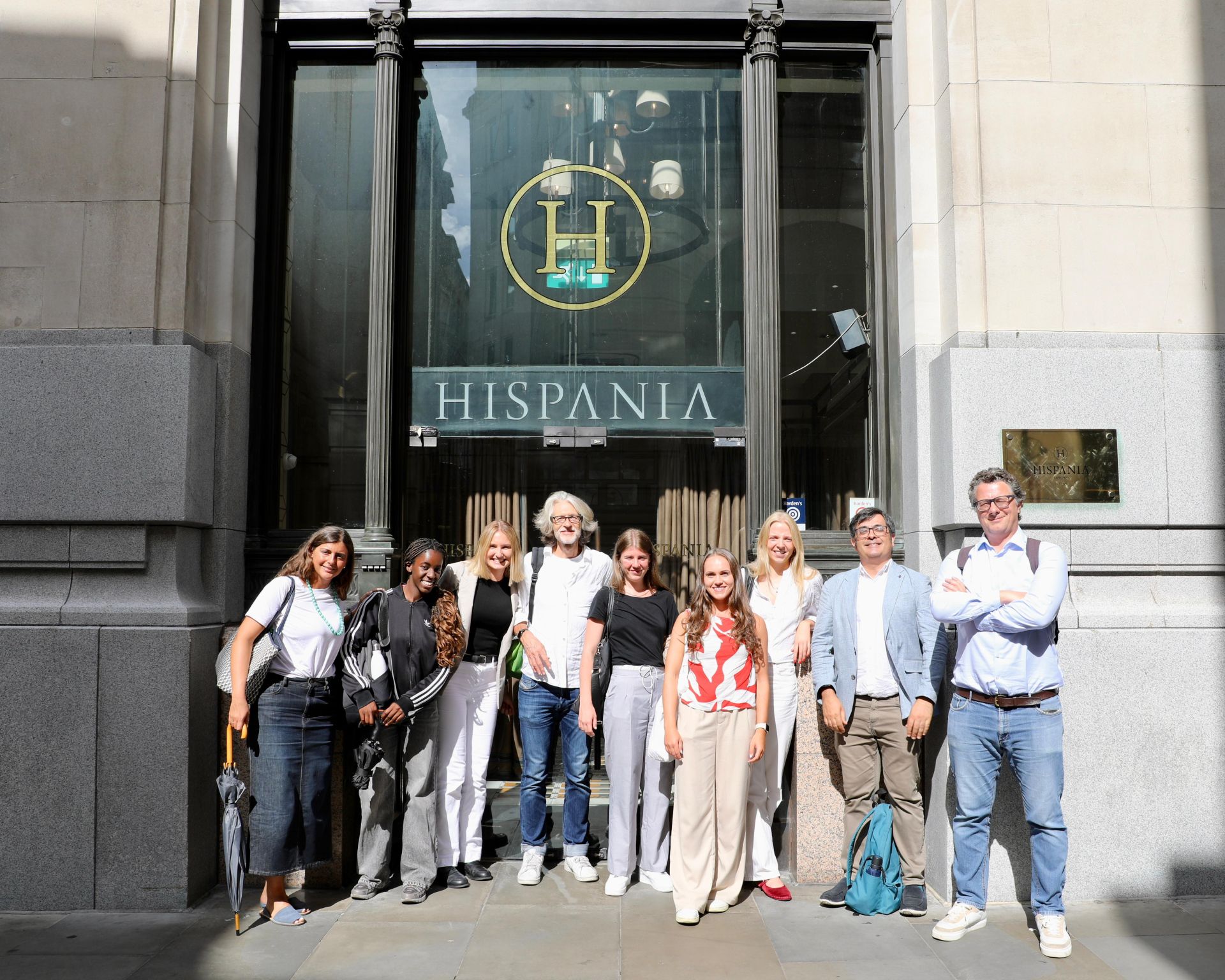
    Hispania

    In the City, Chamber Benefactor Hispania offered a striking change of scene. With soaring ceilings and elegant décor, it stands as both a flagship of Spanish culture in London and a proud ambassador of Asturian tradition.

    A generous spread awaited us: crispy cheese filo pastries, monkfish fritters with piquillo peppers, croquetas, and the timeless pairing of membrillo with cheese. To finish, we toasted with sidra de hielo — a sweet Asturian cider and distinctive regional touch that left a lasting impression.

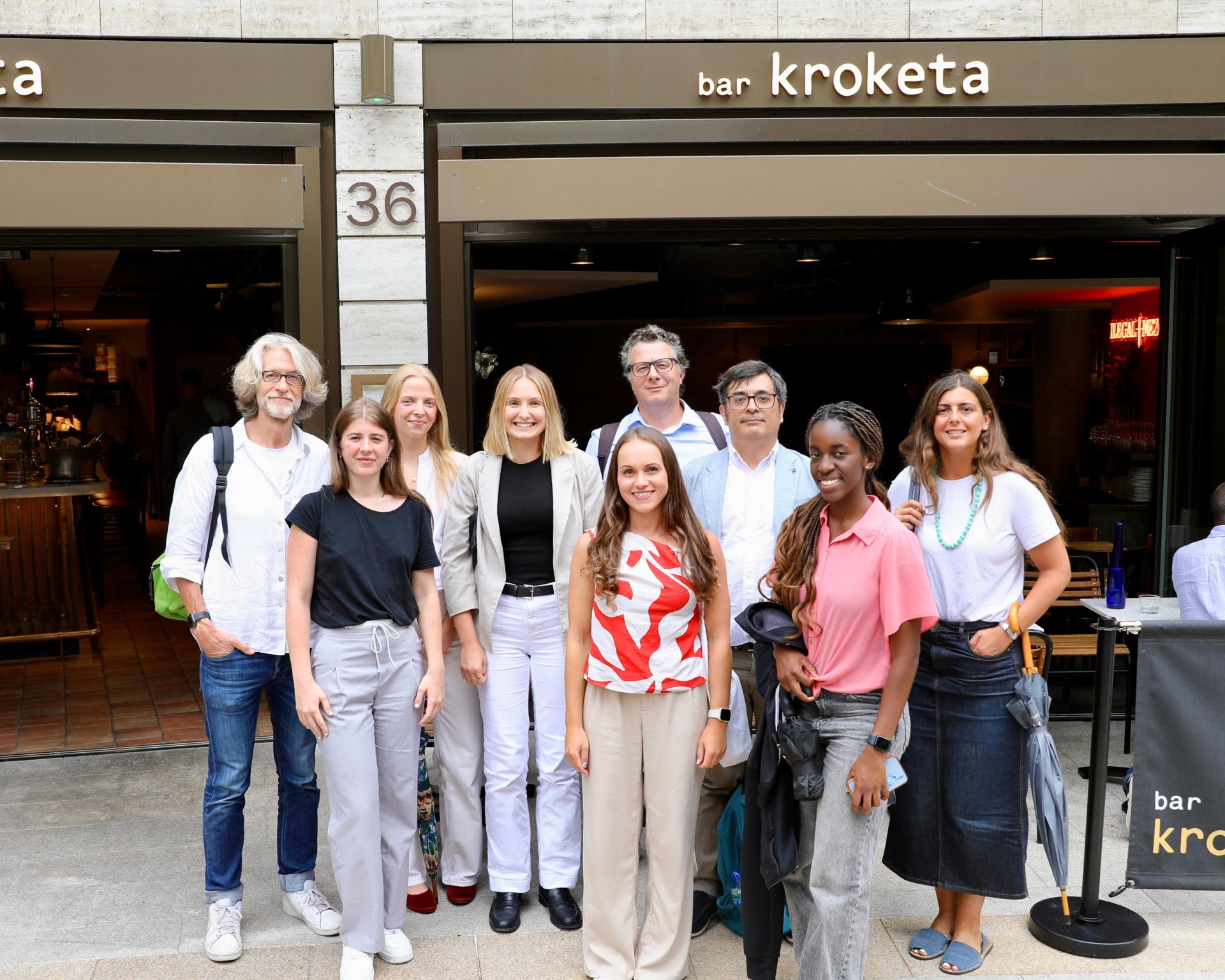
    Bar Kroketa

    No tapas journey would be complete without croquetas, and Bar Kroketa has built its reputation on exactly that. Inspired by the buzzing bar culture of northern Spain, its small Beak Street corner has grown into three vibrant London locations.

    We tried two playful reinventions: one with king prawn, the other with piquillo pepper and Manchego. Creamy, versatile and utterly addictive, they showed why this golden bite remains one of Spain’s most beloved tapas.

    Sagardi

    We ended in true Basque style at Sagardi, a Chamber Member that channels the spirit of the txoko through seasonal produce, ancestral recipes and mastery of the grill.

    Our table soon filled with Biscayan morcilla, Iberian ham croquetas and a cider-house cod tortilla. The star of the meal was the legendary txuleton, seared over flames and carved with precision. Dessert was a fitting finale: silky Basque cheesecake followed by dark chocolate truffles with a hint of apple liqueur.

    A Journey Across Spain – in London

    From Valencia’s rice fields to Scotland’s seas, and from Asturian cider houses to Euskadi’s fire-driven kitchens, the Tapas Tour celebrated not only five outstanding restaurants but also the cultural bridge that Spanish food continues to build between our two countries.

    We thank our Benefactors, Members and partners for their generous hospitality in making this first Tapas Tour such a success. Initiatives like this embody the Chamber’s purpose: to bring together business, culture and community – while celebrating the very best of Spain in the UK.

    Blog post written by Natasha Tinsley

  • Beyond an Internship: Building Bridges and Making an Impact 

    Beyond an Internship: Building Bridges and Making an Impact 

    When people hear the word “internship,” they often picture a temporary learning experience: an introduction to the working world where observation outweighs action. At the Spanish Chamber of Commerce in the UK, internships are far more than that. Interns take on cross-functional, hands-on roles, being encouraged to take ownership, propose ideas and implement solutions. These opportunities not only allow interns to grow but also trust them to shape initiatives that will continue beyond their time with the Chamber. The experience blurs the lines between student and professional and offers a front-row seat to the reality of international business, with all its challenges, responsibilities, and opportunities. Hear from our Foreign Trade and Communications intern, Lucía, as she shares her insights and experiences from this transformative role in this new blog post.

    Working across borders and departments 

    As a Foreign Trade and Communications Assistant, my days were shaped by a mix of analytical and interpersonal tasks: conducting sector-specific market research, identifying UK companies that could become partners for Spanish clients, drafting commercial proposals, and coordinating agendas that brought both sides to the table. I also attended meetings with clients, helped prepare for trade fairs, and took part in shaping our newsletter and brainstorming new ways to connect with potential leads — experiences that taught me how to manage projects and collaborate more effectively as a team. 

    What made this role so valuable was the constant interaction with other departments. From communications to finance to events, every project required shared input and coordination. This gave me a deep understanding of how interdependent the Chamber’s work is and how important it is to have a central tool that can support and connect all areas effectively. That insight became the starting point for one of the main focuses of my internship: improving our Customer Relationship Management (CRM) system. 

    Connecting the dots: a CRM designed for our needs 

    The Chamber uses Zoho CRM, a system that, when configured well, can become a shared platform for everything from managing client relationships to sending event invitations, tracking project stages, issuing invoices, and monitoring engagement. I worked on reshaping the CRM structure to match our internal workflows, tailoring modules like Deals and Leads to reflect the reality of Foreign Trade and Membership. We added pipelines, automated tasks, segmented contacts, and linked the CRM to external tools such as Zoho Billing, Zoho Campaigns, and Zoho Analytics. 

    These changes helped bring clarity, reduce repetitive work, and improve the quality of our client data. More importantly, they allowed us to spot trends, prepare better reports, and communicate more personally with our network. When things are clear and connected internally, it shows externally. The CRM helped us work better as a team, which made our service more consistent and personal.

    Owning a project, driving change 

    Being responsible for a project like this as an intern was both a challenge and a privilege. I wasn’t just learning how things worked; I was asked to make them work better. That trust motivated me to create not only the tools but also a set of training guides and tutorials to ensure future interns and staff can build on this work. I learned how crucial continuity is when developing internal systems, and how impactful a well-designed process can be for everyone. 

    But what really made this experience special wasn’t just the tools or systems I worked on; it was the cultural exchange behind everything. As a Spanish intern in the UK, I was part of an organisation that lives between two business cultures. Every day meant translating not only words but also expectations, habits, and ways of thinking. And through it all, I never lost sight of why I was there: to help build a bridge between Spain and the UK. That feeling of being helpful and making things easier for both sides is what made the whole experience so enjoyable. It reminded me that this wasn’t just about doing a job, it was about building something meaningful. 


    Blog post written by Lucía Esteve

  • AI Fraud Detection: Preventing Scams with Generative AI

    AI Fraud Detection: Preventing Scams with Generative AI

    Artificial intelligence (AI) has transformed the way businesses operate, offering powerful tools to enhance security, streamline processes, and improve user experiences. However, the same AI advancements have also been exploited by cybercriminals to develop more sophisticated fraud techniques. Generative AI, in particular, has enabled scammers to create highly realistic fake content, manipulate identities, and execute financial fraud at an unprecedented scale.

    As AI-driven fraud continues to evolve, organizations must implement robust detection and prevention strategies to mitigate risks. Machine learning, biometric authentication, and real-time fraud analysis are becoming essential tools in this battle. Financial institutions, businesses, and governments are increasingly investing in AI-based security solutions to counteract these emerging threats.

    In this article, we will explore AI-driven fraud, its impact on various industries, and the crucial role of AI in fraud prevention. We will also examine the challenges associated with AI fraud detection and how companies like Veridas are leading the charge in protecting businesses and consumers from generative AI fraud. By understanding these risks and solutions, organizations can strengthen their defenses against increasingly sophisticated cyber threats.

    Blog post written by José Miguel Sánchez, Digital Identity Consultant at Chamber Patron Veridas.


    Understanding AI-Driven Fraud

    AI-driven fraud refers to fraudulent activities that leverage artificial intelligence to deceive individuals, businesses, and financial institutions. These scams often involve the use of machine learning algorithms to generate fake identities, manipulate digital content, and conduct highly convincing phishing attacks. Unlike traditional fraud, which relies on human intervention, AI fraud can be fully automated, making it more scalable and difficult to detect.

    The sophistication of AI-driven fraud is particularly concerning because it enables cybercriminals to bypass conventional security measures. Fraudsters can use AI to generate deepfake videos and synthetic voice recordings that mimic real individuals. These AI-generated assets can be used to gain unauthorized access to financial accounts, execute business email compromise (BEC) scams, and create false identities for fraudulent transactions.

    With the increasing accessibility of AI technology, fraudsters can automate their attacks, allowing them to target multiple victims simultaneously. This makes AI fraud a growing concern for financial institutions, e-commerce platforms, and government agencies. Detecting and preventing these types of scams requires advanced AI-based security measures that can differentiate between legitimate and fraudulent activity in real-time.


    What is AI Fraud?

    The Role of Generative AI in Financial Scams

    AI fraud encompasses a wide range of fraudulent activities that leverage artificial intelligence to manipulate, deceive, and exploit victims. One of the most concerning aspects of AI fraud is the use of generative AI to create realistic yet fake content, such as deepfake videossynthetic identities, and AI-generated phishing emails. These sophisticated attacks make it increasingly difficult to distinguish between legitimate and fraudulent interactions.

    In financial scams, generative AI is used to impersonate individuals, fabricate financial documents, and forge identity verification processes. For example, fraudsters can generate highly realistic deepfake videos or audios of a company executive, instructing employees to transfer funds to a fraudulent account. Similarly, AI-generated synthetic identities can be used to open bank accounts and apply for loans under false pretenses, causing significant financial losses.

    The rapid advancement of generative AI has made these scams more accessible and effective, increasing their impact on financial institutions and businesses. To combat AI-driven fraud, organizations must adopt advanced fraud detection techniques, such as AI-powered behavioral analysis and biometric authentication, to verify identities and detect anomalies in real time.


    AI and Fraud Prevention Strategies

    Machine Learning for Fraud Detection

    Machine learning is one of the most powerful tools in combating AI-driven fraud. By analyzing vast amounts of data, machine learning algorithms can identify patterns, detect anomalies, and flag suspicious transactions in real time. Unlike traditional fraud detection methods that rely on predefined rules, machine learning continuously adapts and evolves to recognize new fraudulent tactics.

    One of the key applications of machine learning in fraud prevention is anomaly detection. AI systems can analyze user behavior and detect deviations from normal activity, signaling potential fraud. For example, if a user suddenly initiates a large financial transfer from an unusual location, the system can flag the transaction for further verification. This proactive approach helps prevent fraud before it causes financial harm.

    Additionally, machine learning enhances fraud prevention by reducing false positives. Traditional security systems often block legitimate transactions due to rigid fraud detection rules. AI-powered fraud detection minimizes these errors by accurately distinguishing between normal and suspicious activities, ensuring a smoother user experience without compromising security.


    AI in Banking and Identity Theft Prevention

    The banking industry has been one of the primary targets for AI-driven fraud, leading to increased investment in AI-based security solutions. Banks and financial institutions are leveraging AI to monitor transactions, authenticate users, and detect fraudulent activities with greater accuracy. One of the most effective applications of AI in banking security is biometric authentication, which verifies users based on their unique physical traits.

    AI-driven biometric authentication includes facial recognition, voice recognition, and fingerprint scanning. These technologies provide an additional layer of security, making it difficult for fraudsters to impersonate legitimate users. For example, a bank can require facial recognition verification before authorizing a high-value transaction, ensuring that only the account holder can complete the process.

    Another crucial aspect of AI in banking security is identity verification. AI systems can analyze digital identity documents, detect signs of forgery, and compare them with biometric data to confirm authenticity. This prevents fraudsters from using stolen or synthetic identities to gain unauthorized access to financial services, significantly reducing identity theft and financial fraud risks.


    The Future of AI in Fraud Detection

    Challenges and Ethical Concerns

    While AI plays a crucial role in fraud detection, it also presents significant challenges and ethical concerns. One of the primary concerns is the potential for AI-driven fraud to outpace fraud detection technologies. As fraudsters continuously refine their techniques, security systems must constantly evolve to keep up with emerging threats.

    Another challenge is the risk of false positives and discrimination in AI-driven security systems. If not properly trained, AI models can unfairly flag certain individuals or transactions as fraudulent based on biased data. Ensuring fairness and transparency in AI fraud detection requires ongoing monitoring and ethical AI development practices.

    Additionally, the widespread use of AI in fraud detection raises privacy concerns. AI-driven security systems rely on extensive data collection, including biometric information and behavioral analytics. Organizations must implement strong data protection policies to ensure that user data is handled securely and ethically while maintaining compliance with privacy regulations.


    Comprehensive Protection Against Generative AI Fraud: Veridas’ Approach

    The rise of generative AI has ushered in a new era of identity fraud, making digital security more critical than ever. What was once complex and expensive is now accessible, scalable, and cost-effective for fraudsters. In response to this escalating threat, Veridas emphasizes the importance of securing the entire identity journey, from digital onboarding to ongoing authentication.

    Traditional security measures are increasingly inadequate against sophisticated AI-generated fraud. Fraudsters can bypass conventional defenses by injecting synthetic data directly into systems, rendering standard detection methods ineffective. To counteract these advanced tactics, Veridas has developed a suite of robust security measures. These include API security to prevent unauthorized access and virtual camera detection to block fake cameras, ensuring the integrity of biometric data capture.

    By implementing these advanced security measures, Veridas aims to provide a comprehensive defense against the evolving landscape of AI-driven fraud. Their holistic approach ensures that every stage of the identity process is fortified, offering individuals and organizations enhanced protection in an increasingly digital world.


    New Defense: Advanced Injection Attack Detection

    • Ensures device authenticity – Identifies emulators, virtual machines, and automated bots before fraudulent activity can begin.
    • Prevents large-scale fraud – Halts emulated attacks at their origin, stopping scammers before they infiltrate systems.
    • Detects and blocks AI-powered fraud – Prevents synthetic data injection attempts that conventional security measures often overlook.
    • Works alongside liveness detection – Enhances security across biometric verification methods, including facial recognition, voice verification, and AI document validation.


    A New Standard in Fraud Prevention

    1. Verify the device. Real phone or emulator? Genuine user or bot?
    2. Stop fraud at the source. Catch AI-driven injection attacks before they enter the system.
    3. Secure the entire journey. Not just identity verification—the device itself.


    Start detecting identity fraud with generative AI

    Generative AI fraud is an evolving threat that requires constant vigilance and advanced security measures. As cybercriminals exploit AI to execute more sophisticated scams, organizations must invest in AI-driven fraud detection strategies to protect themselves and their customers. Companies like Veridas are paving the way for safer, AI-powered security solutions that detect and prevent fraud in real time.

    By integrating machine learning, biometric authentication, and advanced anomaly detection, businesses can enhance their fraud prevention capabilities and mitigate financial risks. The future of fraud detection will depend on continuous innovation, ethical AI development, and collaboration between technology providers and regulatory bodies.

    Understanding the risks and solutions surrounding AI fraud is essential for businesses to stay ahead of cyber threats. By embracing AI-powered security technologies, organizations can build a more secure digital environment and protect their assets from the growing dangers of AI-driven scams.

  • UK ETA for Spanish Citizens: Everything You Need to Know for 2025 Travel

    UK ETA for Spanish Citizens: Everything You Need to Know for 2025 Travel

    From 2nd April 2025, all Spanish nationals must obtain a UK Electronic Travel Authorisation (ETA) to enter the country for tourism, business, transit, or short-term stays.  

    In this FAQ guide, the Spanish Chamber of Commerce in the UK explains who needs an ETA, how to apply, costs, validity, and where to find resources in Spanish. 


    What is an ETA? 

    An Electronic Travel Authorisation (ETA) is a digital permission required to travel to the UK. It applies to people who do not need a visa for short visits of up to six months. 

    The ETA forms part of the UK’s transition towards a fully digital border, mirroring systems already in place in countries like the US (ESTA), Canada (eTA), and Australia (ETA). 

    Who needs to apply for the UK ETA?
    You must apply for an ETA if you:
    • Are a Spanish citizen (or a national of any other visa-exempt country)
    • Are travelling to the UK for a short visit (up to six months) for tourism, business, short-term study or to visit family and friends
    • Are transiting through the UK and will cross the UK border
    • Do not already have a UK visa or immigration status (such as settled or pre-settled status under the EU Settlement Scheme)

    Since when is this requirement in place?
    The ETA requirement for Spanish citizens has been in effect since 2nd April 2025. All eligible travellers must now hold a valid ETA before boarding transport to the UK. 

    How do I apply? 

    The application process is quick, simple and online. You will need:
    • A valid biometric passport
    • A recent digital photo
    • A credit or debit card to pay the fee 

    Apply here via the official UK Government website or mobile app. 

    How much does the ETA cost?
    An ETA costs £16 per person. 

    How long is the ETA valid for?
    An approved ETA is valid for two years, or until your passport expires — whichever comes first. It can be used for multiple trips to the UK while it remains valid. 

    How long does it take to receive my UK ETA?
    Most applications are processed within three working days, although some may be quicker. Travellers should apply in good time before their trip. 

    What if I already have a UK visa or EU Settlement Scheme status?
    You do not need to apply for an ETA if you already hold:
    • A valid UK visa
    • Settled or pre-settled status under the EU Settlement Scheme (EUSS) 

    Are there any video guides?

    The UK Government has produced short, informative videos in English that explain the ETA process, including who needs it and how to apply.  

    Watch now: 


    Are there any resources in Spanish?

    For a detailed guide in Spanish covering eligibility and the application process for the UK ETA, click here.


    Stay updated 

     For the latest news, requirements, and application updates: 

    Visit the official GOV.UK ETA page 

    Subscribe to email alerts for real-time notifications 

    Key Takeaways 

    • All Spanish citizens need an ETA for UK travel from 2 April 2025.
    • Apply online in minutes — cost is £16. 
    • Valid for 2 years and multiple trips. 


    Plan ahead and secure your ETA before booking your trip to the UK to avoid delays at the border. Enjoy your trip!


    Blog post written by Natasha Tinsley

  • FAQs About the “Grandchildren Law” (Ley de Memoria Democrática): A Guide for British Citizens

    FAQs About the “Grandchildren Law” (Ley de Memoria Democrática): A Guide for British Citizens

    The Spanish Ley de Memoria Democrática, commonly referred to as the “Grandchildren Law”, has opened the door for thousands of foreign nationals of Spanish descent — including British citizens — to apply for Spanish nationality.

    Here’s what you need to know if you are exploring this once in a lifetime opportunity:


    Who is eligible to apply for Spanish nationality under the Grandchildren Law?

    • Children & grandchildren of a Spanish mother, father or grandparent who, under Spanish law, is considered originally Spanish. 
    • Children of Spaniards whose nationality of origin was recognised through the right of option under the Historical Memory Law (Seventh Additional Provision of Law 52/2007 of December 26) or the current Democratic Memory Law. 
    • Individuals born outside of Spain to Spanish women who lost their nationality by marrying a foreign citizen before the Spanish Constitution came into force in 1978. 


    Do I need to live in Spain to apply for Spanish nationality under the Grandchildren Law?

    No. Residency in Spain is not required to apply for or maintain Spanish nationality under this law. 


    Once I obtain Spanish nationality under the Grandchildren Law, will I receive a European passport? 

    Yes. A successful application grants you full Spanish citizenship, which includes an EU passport and all associated rights, such as freedom of movement, work, and residency in EU countries. 


    Is knowledge of the Spanish language or culture required to apply for Spanish nationality under the Grandchildren Law? 

    No. Unlike other paths to Spanish citizenship, theGrandchildren Law does not require you to pass a language test or cultural integration exam. 


    Do I have to renounce to my current nationality? 

    No. The Grandchildren Law does not require you to renounce to your current nationality. 


    Is there a deadline for applying for Spanish citizenship under the grandchildren law? 

    Yes. Applications must be submitted by 21 October 2025. 


    Can I still process my application after the deadline if it was submitted on time? 

    Yes. As long as the application is submitted before the deadline (i.e. by 21 October 2025), the process can continue beyond that date. 


    How long does the process take? 

    Processing times can vary significantly depending on the specific consulate handling the application. Some consulates experience higher volumes of applications and may take longer to process cases. For this reason, early action and careful preparation are essential to avoid unnecessary delays and ensure the application is submitted before the deadline. 


    Dancy Naranjo, Head of Immigration Department at Scornik Gerstein LLP.

    Chamber Member SCORNIK GERSTEIN LLPhas successfully assisted many Spanish descendants in their process to claim for their Spanish nationality under this law. If you would like them to assess your circumstances to confirm whether you can apply, please contact them at your earliest convenience. 

    We strongly recommend acting as soon as possible. Gathering the required documentation can be complex and time-consuming, which may lead to the application being submitted after the deadline. 


    Download the Grandchildren Law Guide here 


Este sitio web utiliza cookies para que usted tenga la mejor experiencia de usuario. Si continúa navegando está dando su consentimiento para la aceptación de las mencionadas cookies y la aceptación de nuestra política de cookies, pinche el enlace para mayor información.plugin cookies

ACEPTAR
Aviso de cookies